No products in the cart.
Blog
How to Buy Truckloads of Overstock
25
Jun
Jun
A full truckload can look like a shortcut to bigger profits – or a fast way to tie up cash in inventory that moves too slowly. That is why knowing how to buy truckloads of overstock starts with math, not hype. If you are moving beyond single pallets and want larger, more consistent inventory buys, the goal is simple: buy lots you can actually process, price, and resell at a profit.
Why truckloads of overstock appeal to resellers
Truckload buying gives you a lower average unit cost than smaller wholesale purchases in many cases. When the inventory is sourced correctly, overstock can offer cleaner merchandise, more consistent packaging, and less condition risk than heavy return-based loads. For retailers, flea market sellers, discount store operators, and online resellers, that can mean faster turnaround and more predictable margins.
The scale is the real advantage. Instead of piecing together inventory from multiple small buys, one truckload can stock shelves, refill a warehouse, or support several sales channels at once. If you already understand your customer demand, this volume can create better buying power and more room for profit.
The trade-off is just as real. Truckloads require more capital, more storage space, better freight planning, and tighter sell-through discipline. A cheap load is not a good load if half the product sits for months.
How to buy truckloads of overstock without guessing
The best buyers do not start with whatever is available. They start with what sells. Before you request a quote or review manifests, get clear on your resale model. A discount store can absorb mixed general merchandise differently than an online seller focused on small, shippable items. A bin store may welcome broad category variance, while a boutique reseller may need tighter SKU consistency.
That means your first decision is not supplier – it is inventory fit. Ask yourself what categories move fastest in your business, what condition grades your customers will accept, and how much testing, sorting, or repackaging your team can handle. Overstock often comes in better condition than returns, but overstock is still a broad label. Some loads are shelf pulls. Some are closeouts. Some are excess seasonal goods. Each one has a different resale profile.
If you skip this step, you are buying volume instead of buying inventory.
Know the overstock categories you are considering
Truckloads of overstock are not all built the same. A mixed merchandise load may give you variety and wider customer appeal, but it also creates more labor on the back end. You will need to sort, price, and market across several categories. A category-specific load like tools, apparel, cosmetics, kitchenware, or electronics can be easier to merchandise if you already sell in that lane.
Condition matters too. Brand-new overstock usually commands stronger resale prices, but shelf pulls may include damaged packaging, missing tags, or store handling wear. Seasonal overstock can produce great margins if you buy early enough, but it can also become dead stock if your timing is off.
For newer buyers, simpler is usually better. One clean category with clear demand is easier to manage than a truckload filled with random SKUs you have never sold before.
Read manifests carefully, and know when unmanifested loads still make sense
A manifest gives you a clearer picture of what is in the load, but it should never be treated like a guarantee of exact resale results. Quantities can vary, values can be optimistic, and product rankings on paper do not always reflect real market demand. Use the manifest to estimate your floor and ceiling, not to convince yourself every item will sell at top price.
Unmanifested truckloads are different. They can offer strong value, especially for buyers who know how to process mixed inventory and spread risk across multiple channels. But they require more experience, stronger sorting operations, and more tolerance for variability. If you are just learning how to buy truckloads of overstock, a manifested or partially manifested load is often the better first move.
Check the numbers before you commit
A profitable truckload buy depends on landed cost, not just inventory price. Buyers get into trouble when they focus only on the per-load deal and ignore everything that happens after checkout. Freight, unloading, labor, storage, prep work, marketplace fees, and markdown risk all affect your margin.
Start with your expected recovery rate. If a load costs $12,000 and freight adds $1,800, your true buy-in is $13,800 before labor. If you realistically believe you can recover $24,000 over time, that might look attractive. But if sorting and selling will cost another $4,000 and slow-moving inventory forces discounting, your margin narrows quickly.
Be conservative. Base your numbers on what you can actually sell for, not on the highest listed prices you find online. A good truckload deal still has room for error.
Build your margin around speed, not just gross sales
A truckload that generates a slightly lower gross margin but turns quickly can outperform a load with higher theoretical margin that takes six months to move. Cash flow matters. Storage matters. Labor fatigue matters. This is especially true for smaller operators trying to grow without overextending.
Ask how long the inventory will take to process, how quickly it can be listed or shelved, and whether your current customer base already buys that category. Fast-moving goods often beat complicated loads with bigger headline value.
Vet the supplier like a business partner
A truckload purchase is not the place for vague answers. Serious buyers should expect clear communication about inventory type, condition, sourcing category, purchase terms, payment expectations, and freight coordination. If a supplier avoids direct questions, gives inconsistent descriptions, or pushes urgency without enough detail, that is a warning sign.
A dependable liquidation partner should be able to explain what kind of merchandise is in the load, whether the truckload is manifested, how freight is quoted, and what the buyer needs to receive the shipment. That does not mean every load is risk-free. Liquidation always has variables. But there is a difference between normal variability and poor transparency.
This is where working with an established bulk supplier matters. Buyers need real inventory access, straightforward quote support, and practical guidance on what lot types fit their business stage.
Plan freight, unloading, and warehouse handling in advance
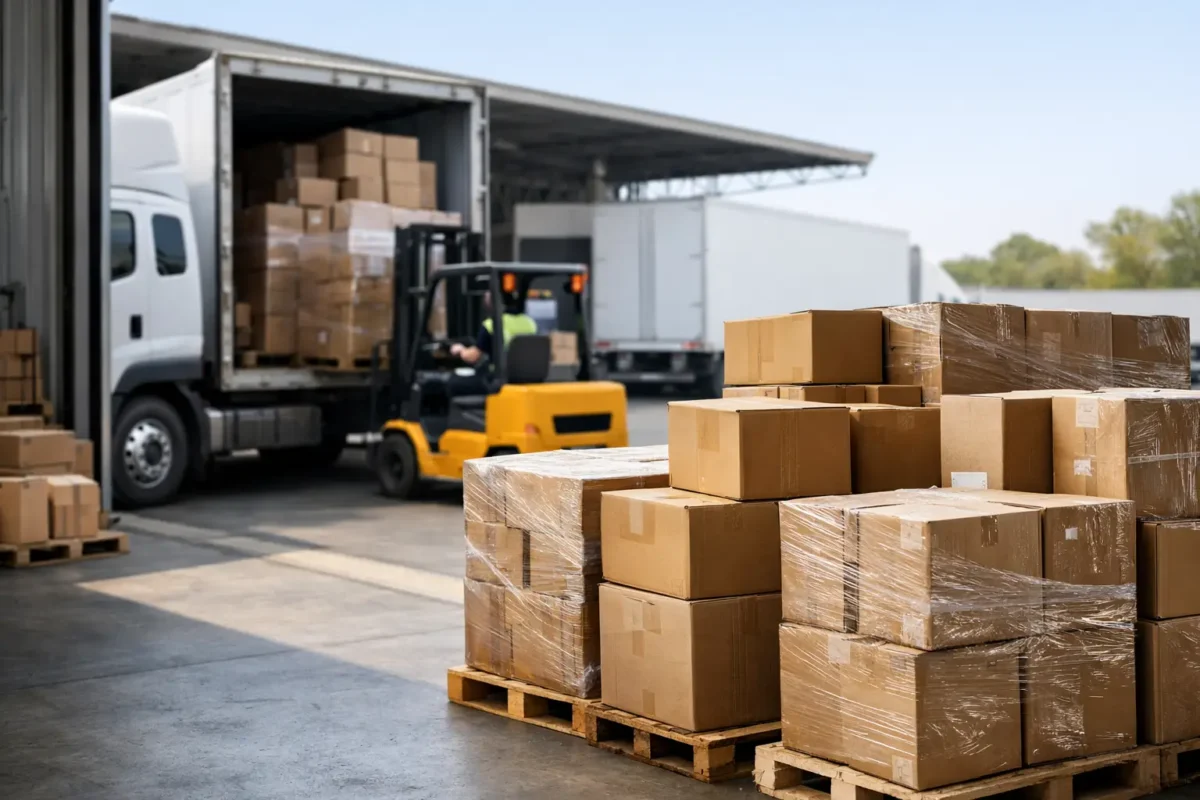
Freight is not a side detail. It is part of the buy. Before placing an order, confirm whether the shipment will require a dock, forklift, lift gate service, appointment scheduling, or special receiving procedures. If you are not set up for a full truckload delivery, solve that before the load ships.
This is one area where new buyers underestimate the operational side. A truckload can arrive on time and still become a problem if you do not have labor ready, floor space cleared, and a process for intake. The faster you can receive, inspect, sort, and stage product, the faster that inventory starts turning into revenue.
If freight is quote-based, treat the quote as part of your total evaluation, not as an afterthought. A load with a lower inventory price can end up costing more overall if the shipping lane is expensive.
Start with the right truckload, not the biggest one
Many buyers think scaling means buying the largest available load. Usually, it means buying the most manageable load that your operation can monetize efficiently. If you are moving from pallets into truckloads, look for inventory categories you already understand. Stay close to proven demand. Keep your processing burden realistic.
For some businesses, that means apparel with broad consumer appeal. For others, it means general merchandise for a discount store, tools for local resale, or kitchenware with simple replenishment potential. The best first truckload is the one your business can absorb and resell with the least friction.
A supplier like American Prime Pallet Liquidators LLC can be especially useful here because the buying process is built around helping resellers match inventory type, load size, and freight planning to actual business goals.
What separates a smart truckload buyer from an impulsive one
Smart buyers do not chase retail value totals. They focus on resale reality. They know their categories, understand their customer base, and leave room in the numbers for labor, freight, and markdowns. They also ask better questions up front, which reduces expensive surprises later.
Impulsive buyers tend to buy for excitement. They see volume, recognizable brands, or a dramatic discount and assume profit will take care of itself. In liquidation, that is usually where mistakes start.
If you want truckload buying to become a repeatable sourcing strategy, treat every load like an operating decision. Know what you are buying, what it will cost to land, how it will be processed, and where it will be sold. Bigger inventory only helps when the business behind it is ready to move it.
The right truckload does more than fill space. It gives you a stronger buying position, more inventory control, and a clearer path to growth – if you buy with discipline from the start.
