No products in the cart.
Blog
Shelf Pulls vs Returns: Which Sells Better?
10
Jul
Jul
One bad pallet can tie up cash, create testing headaches, and slow down your whole resale operation. That is why understanding shelf pulls vs returns matters before you buy. These two liquidation categories can both be profitable, but they behave very differently once they hit your store, warehouse, booth, or online listings.
For resellers, the real question is not which category is “better” across the board. The better question is which one fits your sales channel, labor capacity, customer expectations, and margin target. A pallet that works well for a bin store may be a poor fit for an e-commerce seller. A load that makes sense for an experienced buyer may create too much risk for a beginner.
Shelf pulls vs returns: the core difference
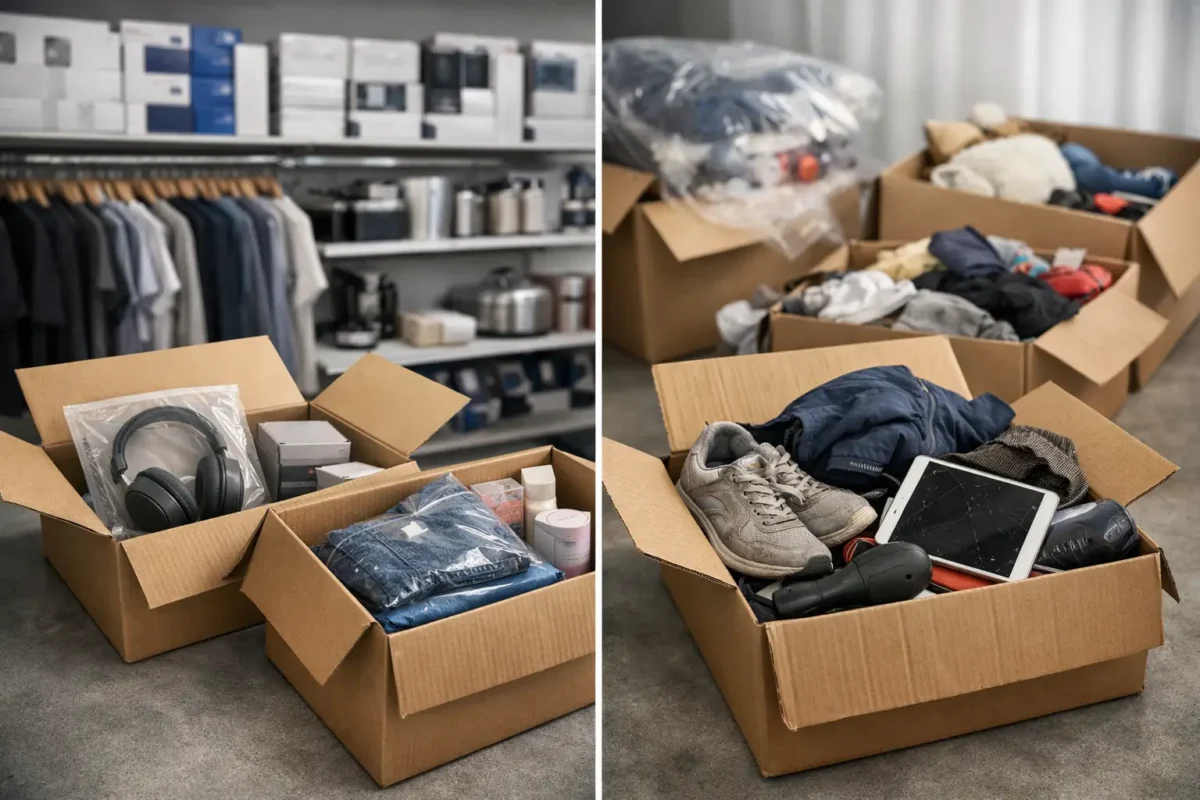
Shelf pulls are products removed from a retail sales floor or warehouse before they were sold to an end customer. In many cases, they are new, seasonally discontinued, package-changed, overstocked, or no longer part of a retailer’s active assortment. Some may show minor packaging wear, markdown stickers, or handling marks from store traffic, but they were generally not purchased and then sent back by a consumer.
Returns are products that were purchased by a customer and later returned to the retailer. That one step changes the risk profile significantly. A returned item may be unopened, lightly used, missing accessories, swapped, damaged, non-working, or simply unwanted. Condition can range from like-new to salvage depending on the source, category, and how the goods were processed.
That difference is what drives pricing, prep time, and resale strategy. Shelf pulls usually offer more predictable condition. Returns often offer lower buy cost, but they typically require more sorting, testing, cleaning, repackaging, or write-offs.
Why shelf pulls often look safer
If you are trying to keep operations simple, shelf pulls are often easier to manage. Since the products were usually never owned by a retail customer, there is a better chance of cleaner presentation and more consistent resale condition. For categories like apparel, footwear, home goods, toys, cosmetics, and seasonal merchandise, that can make a big difference.
Shelf pulls also tend to be friendlier for resellers who rely on visual presentation. A discount store, flea market table, or online listing performs better when merchandise looks clean and complete. Even when outer packaging has wear, many shelf pull items still present as new or close to new.
That said, shelf pulls are not perfect inventory. Some have sticker residue, crushed boxes, missing tags, open packaging, or cosmetic wear from handling. Others may be out of season, slower moving, or from discontinued assortments that need sharper pricing to sell through. The condition is usually better than returns, but not every shelf pull pallet is retail-ready without work.
Why returns can produce strong margins
Returns attract buyers for a simple reason – the cost can be lower, and the upside can be high if you know how to process the merchandise. In categories like electronics, tools, small appliances, and general merchandise, a mixed return pallet can contain plenty of resale value. Some items are fully functional and just came back because the buyer changed their mind. Others need minor fixes, replacement parts, or better listing descriptions.
For an experienced reseller, that gap between buy cost and recovered resale value is where profit lives. If you have staff, testing processes, and a market for open-box or used goods, returns can outperform shelf pulls on raw margin percentage.
But the trade-off is labor. Returns usually demand more time per unit. You may need to inspect, test, pair accessories, verify model numbers, and separate sellable items from loss. If your operation is small and your time is limited, low-cost inventory can become expensive inventory very quickly.
Which is better for new resellers?
For most beginners, shelf pulls are the easier starting point. The condition tends to be more straightforward, the listing process is simpler, and the risk of severe product issues is usually lower. That matters when you are still learning how to price inventory, estimate freight, and move products consistently.
Returns can still work for new buyers, but only if expectations are realistic. A beginner who assumes every return pallet is packed with easy wins usually learns the hard way. If you do not have a process for testing, grading, and handling customer complaints, returns can create friction fast.
A practical middle ground is to start with categories where condition is easier to evaluate. Apparel shelf pulls, footwear shelf pulls, and general merchandise with visible packaging can be easier to manage than electronics returns or mixed hard goods with unknown functionality.
Shelf pulls vs returns by sales channel
Your main sales channel should influence what you buy. If you sell on marketplaces where condition descriptions matter and buyers expect clean presentation, shelf pulls often make more sense. They are usually easier to photograph, describe, and ship with fewer surprises.
If you run a discount store, outlet, export business, or bin store, returns may be more workable because the model allows for broader condition ranges. You can sort by grade, price by condition, and move larger volumes without needing every item to look perfect.
Flea market sellers often do well with either category, but the choice depends on product type. Shelf pulls can create cleaner table displays and faster customer trust. Returns can do well when buyers can inspect items in person and accept open-box or tested merchandise.
For truckload buyers and larger operations, mixing both categories can be smart. Shelf pulls can provide more stable, presentation-friendly inventory, while returns can add lower-cost upside and parts value. The right balance depends on your team and how quickly you can turn product.
Profit is not just about buy price
A common mistake is comparing shelf pulls and returns only by initial cost. That is incomplete math. Real profitability comes from total landed cost plus processing time plus sell-through speed.
A shelf pull pallet may cost more upfront, but if most units are ready to list and sell, your turnaround can be faster and your labor lower. A returns pallet may look cheaper, but if a large portion needs testing or cannot be sold at your usual standard, your true margin shrinks.
This is where disciplined buyers separate themselves. They do not just ask, “How cheap is it?” They ask, “How much work does this inventory require before it becomes cash?” That is the question that protects margin.
What smart buyers check before purchasing
Whether you are buying shelf pulls or returns, the best results come from asking direct operational questions. You want to know the merchandise category, estimated condition range, level of manifest detail if available, pallet or truckload volume, and freight terms. You also want clarity on whether the load is mixed, sorted, tested, or completely uninspected.
Category matters because condition risk is not equal across products. Returns in apparel may be manageable. Returns in electronics may require serious testing and produce more loss. Shelf pulls in seasonal goods may move fast at the right time of year but slower off-season. Shelf pulls in cosmetics may need extra attention to seals, packaging, and resale compliance.
Reliable suppliers help buyers understand those variables upfront. That is especially important if you are buying in volume and planning around freight, labor, and expected resale channels.
How to choose the right inventory for your business
Choose shelf pulls if you want more predictable condition, cleaner presentation, and a simpler resale workflow. They are often a strong fit for newer resellers, online sellers, boutiques, discount retailers, and anyone who wants less sorting risk.
Choose returns if you can handle variability and have a process for extracting value from mixed condition goods. They are often a strong fit for experienced resellers, discount outlets, auction sellers, repair-focused operators, and businesses that profit from testing, bundling, or parting out merchandise.
If you are trying to scale, do not think in terms of one category forever. Think in terms of inventory mix. Many successful buyers use shelf pulls to stabilize cash flow and returns to create higher-margin upside. That approach can reduce risk while keeping buying opportunities broad.
At American Prime Pallet Liquidators LLC, that is the kind of decision-making we encourage – buying based on resale model, labor capacity, and profit target, not just hype around a load.
The best liquidation inventory is the inventory you can process confidently, price correctly, and turn into cash without stalling your business. Start there, and your buying decisions get a lot sharper.
