No products in the cart.
Blog
How LTL Shipping Costs Affect Pallet Profits
25
Sep
Sep
A liquidation pallet can look profitable on paper until freight is added to the invoice. For resellers buying across state lines, LTL shipping costs are not a minor checkout detail. They are part of the true landed cost of every tool, pair of shoes, kitchen item, or electronics unit you plan to resell.
LTL, or less-than-truckload freight, is commonly used when an order is too large for parcel carriers but does not fill an entire semi-trailer. It is often the practical choice for one to several pallets of wholesale inventory. The key is to price the shipment before you decide whether a lot is a good buy. A low pallet price does not automatically create a strong margin if delivery to your warehouse, store, or storage unit is expensive.
What Drives LTL Shipping Costs?
Freight carriers do not quote every pallet the same way. Two mixed merchandise pallets with similar purchase prices can have very different delivery charges based on where they are going, how they are packed, and what is required at pickup and delivery.
Distance is a major factor. A pallet traveling a few hundred miles usually costs less than one moving coast to coast, but mileage is not the only variable. Freight lanes matter. Routes between major metro areas often have more available carrier capacity than rural routes, remote delivery areas, or locations that require a long detour from a terminal.
Shipment size also matters. Carriers consider the number of pallets, total weight, dimensions, and the floor space your freight uses in the trailer. A standard 48-by-40-inch pallet that is securely stacked and does not overhang is easier to handle and quote than an oversized, irregular, or poorly wrapped load. Taller pallets can also affect pricing when they limit how freight can be stacked in a trailer.
Freight class and shipment density can influence a quote as well. In simple terms, dense, compact freight is generally more efficient for carriers to move than lightweight freight that takes up substantial space. Liquidation pallets often contain mixed goods, so accurate dimensions, weights, and product descriptions are essential. Guessing low on weight or listing incomplete shipment details can lead to a corrected bill after delivery.
Accessorial charges are another common source of surprise. These are added services outside of standard dock-to-dock transport. They may include a residential delivery, liftgate service, appointment scheduling, limited-access delivery, inside delivery, or re-delivery after a missed appointment. A commercial address with a loading dock, forklift, and flexible receiving hours will usually be more economical than a home address with no equipment.
The Landed Cost Matters More Than the Pallet Price
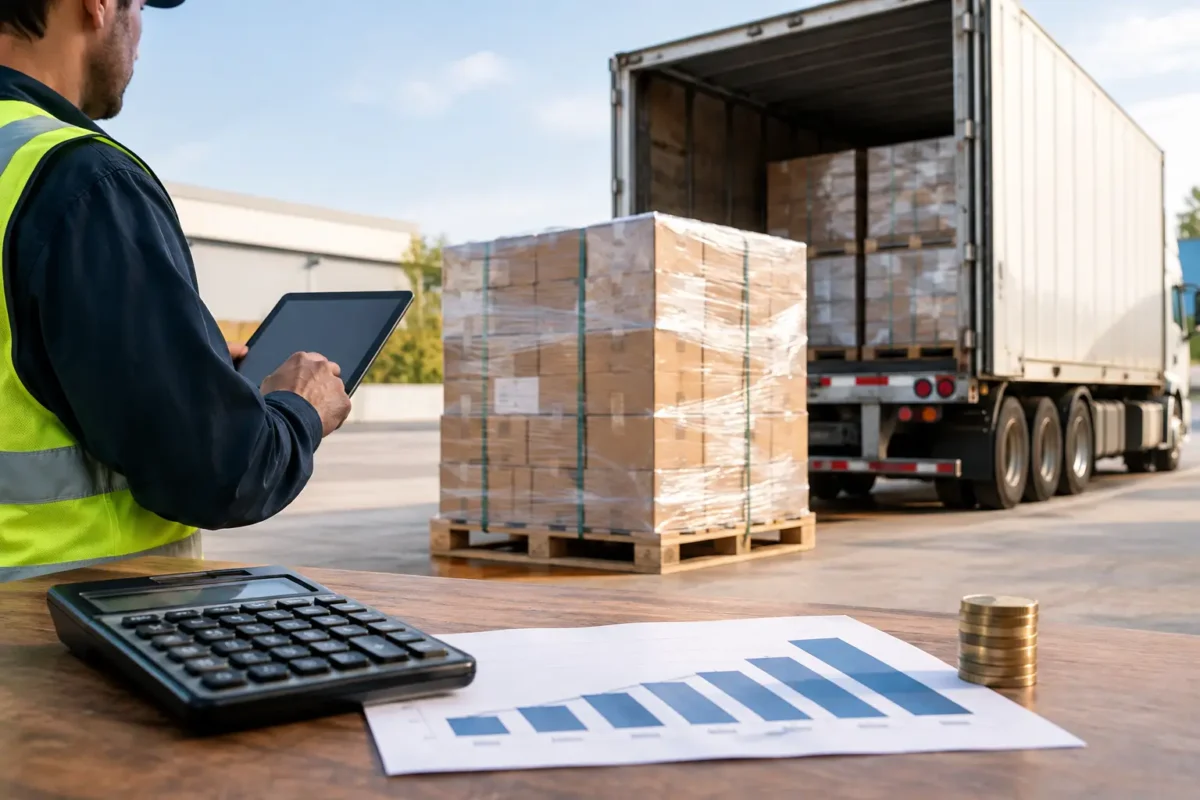
Experienced buyers evaluate inventory by landed cost, not just the advertised cost per pallet. Landed cost includes the inventory purchase price, freight, applicable taxes or fees, unloading expenses, and any labor or supplies needed to prepare merchandise for resale.
For example, a buyer might find a two-pallet tool lot for $1,400 and receive an LTL quote of $450. The immediate inventory cost is not $1,400. Before labor and resale expenses, it is $1,850. If the lot is expected to produce $3,000 in realistic sales, that may still leave room for profit. If expected sales are closer to $2,100, the margin is much thinner than the pallet price first suggested.
This is especially important for customer returns and mixed liquidation inventory. Condition, completeness, and sell-through rates can vary. That does not mean liquidation cannot be profitable. It means buyers should use conservative resale assumptions and treat freight as a fixed buying cost, not an afterthought.
A practical approach is to estimate three numbers before ordering: a conservative resale value, your full landed cost, and the margin remaining after selling expenses. Marketplace fees, payment processing, local delivery, storage, repair parts, cleaning supplies, and labor can all reduce the amount you keep. The buyer who plans for these costs can make better purchasing decisions than the buyer focused only on retail MSRP.
How to Keep LTL Freight From Cutting Into Margin
The best way to manage freight is to plan your order and receiving process around it. You may not control carrier rates, fuel charges, or the destination lane, but you can avoid many preventable costs.
First, consider buying enough inventory to make the freight work harder for your business. One pallet can carry a relatively high transportation cost per unit. Adding compatible pallets may raise the total freight quote, but it can lower freight per pallet and freight per sellable item. This is not a reason to overbuy. Extra inventory only helps when you have storage space, working capital, and a realistic plan to sell it.
Second, use a commercial receiving location whenever possible. A storefront, warehouse, business park, or approved commercial partner location can reduce accessorial charges and simplify delivery. Confirm that the site can receive a freight truck and that someone can inspect and sign for the shipment during carrier hours.
Third, have the right unloading equipment. A loading dock is ideal, but a forklift can also make receiving easier when truck access allows it. If neither is available, request liftgate service in the quote instead of assuming the driver will unload the freight. Liftgate service adds cost, but an accurate quote is better than an unplanned charge or failed delivery.
Finally, consolidate your purchasing schedule. If you regularly source pallets, building orders around planned freight windows can be more efficient than placing frequent small orders. Buyers operating discount stores, flea market booths, or online resale businesses often benefit from replenishing categories in larger, better-planned batches.
Get an Accurate Freight Quote Before Paying
A quote is only useful when it reflects the actual shipment and delivery conditions. Be ready to provide complete receiving information when requesting freight pricing. The following details are typically needed:
- Delivery address and whether it is commercial or residential
- Whether the location has a dock, forklift, or requires a liftgate
- Receiving hours and any appointment requirement
- Number of pallets, pallet dimensions, and approximate total weight
- Any access limits, such as gated entrances, narrow streets, or limited truck access
Be direct about the delivery setup. A carrier may classify a storefront in a busy downtown area differently than a warehouse with a dedicated dock. If your address is a storage unit, church, farm, apartment complex, or home-based business, say so upfront. Clear information protects your budget and helps prevent delays.
When comparing quotes, compare the service level as well as the total number. One quote may include a liftgate and appointment delivery while another covers only standard business delivery. Check whether fuel surcharges, delivery fees, and accessorials are included. The lowest initial quote is not always the lowest final freight bill.
Freight Decisions for New and Growing Resellers
New resellers sometimes avoid larger liquidation orders because freight feels complicated. That is understandable, but shipping should be treated as a business calculation, not a mystery. Start with inventory categories you know how to sell, choose a delivery setup you can handle, and request freight pricing before committing to a lot.
For a first order, a smaller shipment can make sense even if the per-pallet freight is not perfect. It allows you to learn how receiving, sorting, testing, listing, and local sales work without tying up too much capital. As sales become more predictable, larger pallet orders or truckload opportunities may improve your freight efficiency.
American Prime Pallet Liquidators LLC uses a quote-based freight process because the real delivery conditions matter. A buyer in a dock-equipped commercial warehouse has different needs and costs than a first-time reseller receiving inventory at a location that needs liftgate service. Straight answers at the quote stage help buyers plan their purchase with fewer surprises.
Build Freight Into Every Buying Decision
LTL freight should not stop you from buying profitable inventory. It should make you more selective about what you buy, where you receive it, and how much merchandise you bring in at one time. The right shipment can support strong resale margins when its inventory quality, estimated sell-through, and full delivered cost all line up.
Before committing to your next pallet order, get the freight quote, confirm the receiving details, and add the charge to your resale calculation. That extra step gives you a clearer purchase decision and puts you in a better position to turn bulk inventory into dependable profit.
