No products in the cart.
Blog
Overstock Truckloads for Sale That Make Sense
26
Jun
Jun
If you are trying to grow a resale business, random sourcing usually shows up in your numbers fast. Margins get thinner, inventory gets less consistent, and time gets wasted chasing deals that do not scale. That is why many buyers start looking for overstock truckloads for sale when they need more volume, better buying efficiency, and a clearer path to repeatable profit.
A truckload is not the right move for every buyer at every stage. But for discount stores, online resellers, flea market vendors, bin stores, and independent retailers that are ready to buy deeper, overstock inventory can be one of the most practical ways to lower average unit cost and keep product flowing. The key is understanding what overstock really is, where the value comes from, and how to buy with realistic expectations.
What overstock truckloads for sale actually mean
Overstock inventory is merchandise that retailers, brands, or distributors need to move out of normal sales channels. That can happen for several reasons. A retailer may have ordered too much of a product, reset a category, changed packaging, or made room for new seasonal goods. In many cases, the items are new or close to new, but they no longer fit the seller’s regular inventory plan.
That matters because overstock is different from customer returns. Returns often carry more condition risk, missing parts, or repackaging issues. Overstock is usually more attractive to buyers who want cleaner inventory, stronger shelf appeal, and easier resale. It is not always perfect, and there can still be mixed conditions depending on the source, but the risk profile is often lower than straight returns.
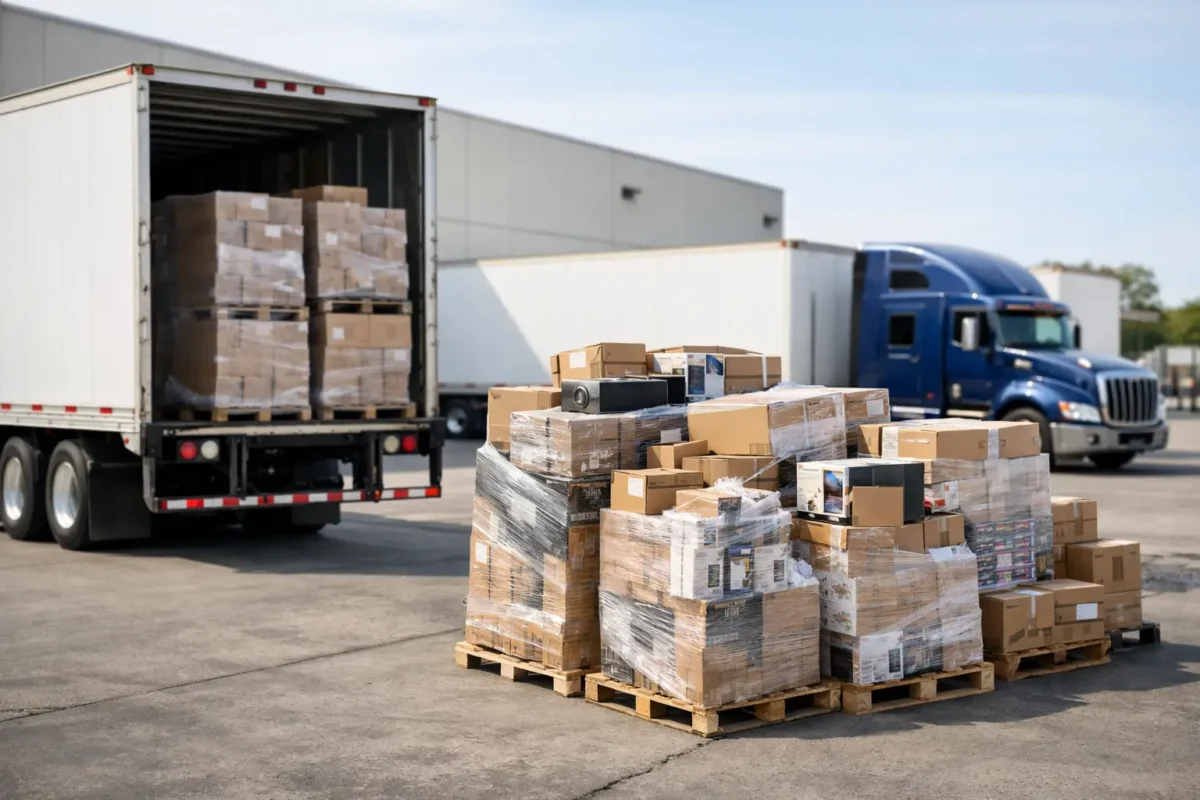
A full truckload gives you that inventory at scale. Instead of buying a few scattered pallets from multiple places, you are bringing in a larger wholesale lot that can support store inventory, online listings, live sales, or multi-channel resale. For serious buyers, that scale is the point.
Why resellers buy truckloads instead of single pallets
At the pallet level, liquidation can help you test categories. At the truckload level, you start buying for efficiency. Freight cost per unit usually improves when you move more product at once, and that can make a major difference in your landed cost. If you already have a warehouse, dock access, or a team that can process volume, truckloads can create a better operating rhythm than piecing inventory together one pallet at a time.
There is also a consistency benefit. Buying larger lots from the same stream can help you understand the product mix, expected condition, and resale pace. That does not mean every truckload is identical. It means your sourcing becomes more intentional and less reactive.
Still, bigger is not automatically better. A low price only helps if the inventory matches your sales channel. A clothing truckload may look attractive on paper, but if you sell mostly tools and home goods, the capital can get tied up too long. Good truckload buying starts with your buyer, not the seller.
The best categories to watch in overstock truckloads for sale
The strongest category depends on how and where you sell. Electronics can offer high resale upside, but they also require tighter testing and more condition control. Apparel moves well for discount stores and live sellers, though sizing, seasonality, and brand mix matter. Tools, kitchenware, home goods, cosmetics, shoes, and general merchandise often appeal to buyers who want broad demand and fast turnover.
Seasonal inventory can be a strong play if your timing is right. Buy too late, and the discount may not make up for the shorter selling window. Buy at the right point, and you can stock up before demand peaks. Mixed merchandise truckloads can also work well for buyers who sell across several categories and want variety, but mixed loads require more sorting and better internal processes.
For newer buyers, cleaner categories with straightforward resale may be easier to manage than highly technical product lines. For experienced operators, specialized categories can make sense if they already know the market and can process the inventory quickly.
How to judge value before you buy
The first mistake buyers make is treating all liquidation inventory the same. They are not buying a headline discount. They are buying a margin opportunity after freight, handling, labor, sorting, testing, marketplace fees, storage, and sell-through time.
Start with the inventory type. Is it true overstock, shelf pulls, mixed liquidation, or blended with returns? Then look at the manifest if one is available, understanding that manifests can vary in accuracy depending on the source. A manifest is useful, but it is not a guarantee. It is part of the decision, not the whole decision.
Next, calculate landed cost. That means product cost plus freight plus the internal cost of getting it resale-ready. If a cheap truckload requires heavy sorting, repackaging, or testing, your real cost may be much higher than expected. On the other hand, a slightly more expensive overstock load with cleaner goods may produce better net profit because it moves faster and takes less labor.
You should also think about exit strategy. Will this inventory sell in your retail store, on online marketplaces, through local bulk buyers, at swap meets, or across all of those? The more clearly you understand your sales outlet, the easier it is to judge whether the load fits your business.
Freight, receiving, and the operational side
Truckload buying is not just a sourcing decision. It is a logistics decision. Before you commit, make sure you can receive the shipment properly. Some buyers have dock-high warehouses. Others need liftgate delivery or alternate arrangements. That affects freight pricing, scheduling, and how smoothly the order gets unloaded.
Quote-based freight is usually the practical way to handle larger liquidation orders because shipping depends on distance, access conditions, load size, and market rates. Buyers sometimes focus only on the inventory price and forget that freight can change the economics of the deal. A good supplier should be straightforward about this and help you understand total delivered cost before payment is finalized.
Once the truck arrives, your processing speed matters. Inventory that sits untouched for two weeks is inventory that is not generating revenue. Buyers who do well with truckloads usually have a system for unloading, sorting, checking condition, pricing, and routing product into the right sales channels quickly.
What trustworthy suppliers do differently
The liquidation market rewards buyers who ask direct questions. You want to know where the inventory comes from, how it is categorized, whether the load is manifested or unmanifested, how freight is quoted, and what condition expectations are realistic. Serious suppliers do not promise perfect loads. They explain the product stream, outline the process, and help buyers choose inventory that fits their business model.
That is especially important for newer resellers. A first-time truckload buyer needs more than a low number on an invoice. They need clear communication, realistic expectations, and guidance on what makes sense for their current stage. A supplier that treats every buyer the same can create expensive mistakes. A supplier that works like a sourcing partner can help buyers avoid mismatched categories, surprise freight issues, and unrealistic margin assumptions.
This is where experience on the wholesale side matters. Companies such as American Prime Pallet Liquidators LLC position truckload buying as a business decision, not a gamble. That is the right frame. The goal is not just to move a load. The goal is to help the buyer source inventory they can actually resell profitably.
Is a truckload right for your business now?
It depends on three things: capital, space, and sell-through. If you have enough working capital to buy inventory without choking cash flow, enough room to receive and process it, and proven outlets to move volume, then a truckload can be a strong next step. If one of those pieces is missing, pallets may be the smarter place to stay for now.
There is no prize for buying bigger before your operation is ready. A well-bought pallet that turns quickly beats a truckload that clogs your warehouse and ties up your cash. But once your systems are in place, overstock truckloads can create better buying power, better unit economics, and more stable sourcing than chasing small lots every week.
The buyers who win in liquidation are usually not the ones hunting the flashiest deal. They are the ones matching the right inventory to the right channel, pricing freight correctly, and buying with discipline. If that is how you operate, truckload overstock stops looking risky and starts looking like the next practical move.
