No products in the cart.
Blog
Customer Returns Pallet Guide for Resellers
04
Jul
Jul
A customer returns pallet guide matters most when you are staring at a low buy-in price and trying to decide whether the margin is real or only looks good on paper. Returns pallets can be profitable, but they are not magic inventory. The buyers who do well with them understand condition risk, test procedures, freight costs, category mix, and how fast they can turn merchandise once it lands.
For resellers, discount store operators, flea market vendors, and online sellers, customer returns can open the door to lower-cost inventory across electronics, tools, housewares, apparel, small appliances, and mixed general merchandise. The trade-off is simple. You usually get stronger pricing than with cleaner inventory types, but you also take on more uncertainty. That is why the buying process needs to be practical, not emotional.
What customer returns pallets actually include
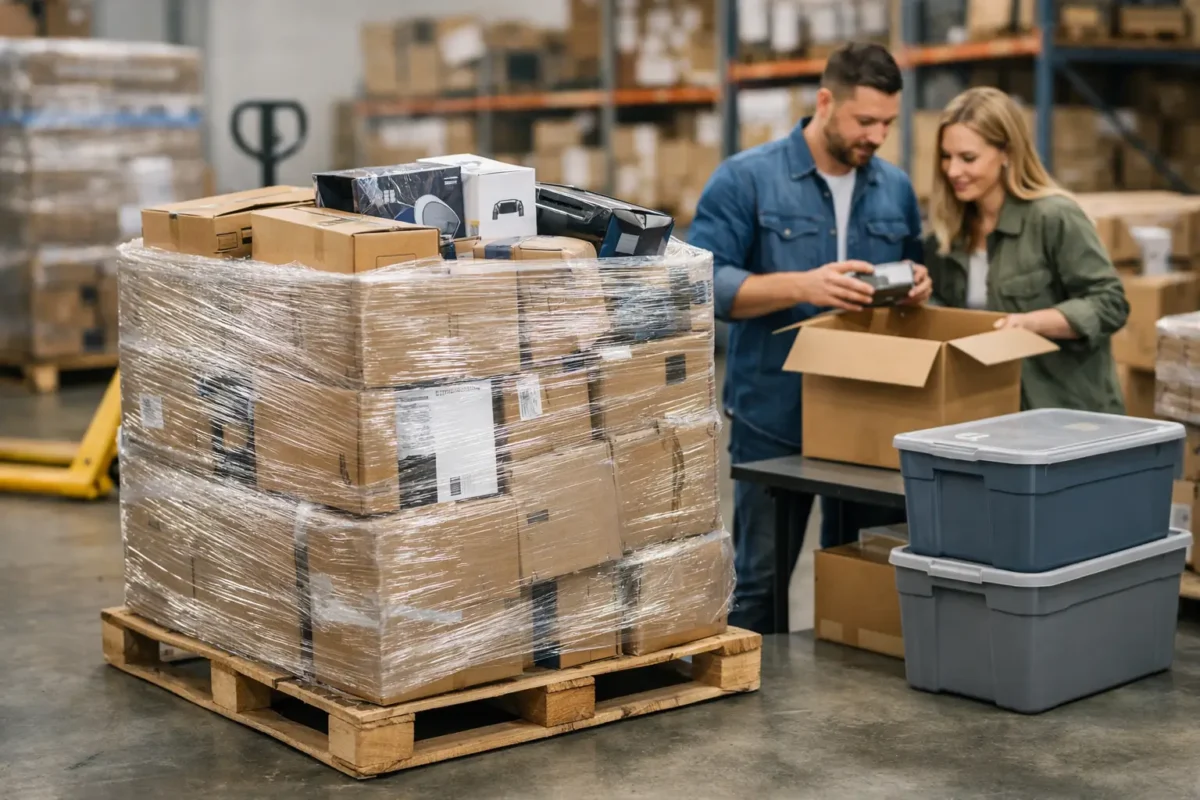
A customer returns pallet is bulk merchandise that has been sent back by retail customers and then consolidated for liquidation. Some items are unopened. Some were opened and never used. Some are lightly used, incomplete, cosmetically damaged, or non-working. In many loads, you will see all of those conditions mixed together.
That variability is exactly why returns pallets can create room for profit. Retailers need to move this inventory fast, and liquidators package it in pallet or truckload quantities for business buyers. If you know how to sort, test, bundle, and price, you can create value that the original seller no longer wants to spend time recovering.
Still, not every pallet is a fit for every operation. A new reseller working from a garage may do better with small mixed lots or simpler categories like home goods, shoes, or shelf-pull apparel. A buyer with warehouse space, staff, and established channels may be able to absorb higher-risk electronics or large mixed merchandise pallets because they have better processing capacity.
The real profit equation behind returns pallets
Too many buyers look only at unit count and retail MSRP. That is how people end up overpaying for inventory that ties up cash. The better approach is to work backward from resale recovery.
Start with your likely sell-through rate. If 100 items arrive, how many do you realistically expect to sell in their current state, after light cleaning, after testing, or after combining parts and accessories? Then look at average resale value by condition, not by original retail price. A returned coffee maker with no box and light wear does not sell like a new one, even if the retail tag says otherwise.
Next comes your handling cost. That includes freight, unloading, sorting time, cleaning, testing, repackaging, storage, disposal, and marketplace fees if you sell online. A pallet with a cheap landed cost can still be a bad buy if it takes too much labor to recover value. On the other hand, a better-structured load with stronger item consistency may cost more upfront and still produce better net margin because it moves faster.
This is where experienced buyers gain an edge. They do not ask only, “How cheap is it?” They ask, “How quickly can I turn it, and what does it cost me to process?”
Customer returns pallet guide: how to evaluate a load
A strong customer returns pallet guide starts with source quality and load transparency. Before you buy, you want a clear understanding of what category you are getting, the condition profile, the pallet count, and how freight is handled. Serious suppliers do not promise perfect goods on returns inventory. They explain the inventory type honestly and help you buy based on your business model.
Manifested loads can be useful because they give you item-level visibility, but they are not automatically better in every case. A manifest may contain retail values and SKU details, but your actual recovery still depends on condition. Unmanifested or mixed pallets can work well when pricing is aggressive and your sales channel is broad enough to handle variety.
Category fit matters just as much as price. Electronics can offer strong upside, but they usually demand more testing and come with more failure risk. Apparel and shoes often move faster for some sellers, though sizing, seasonality, and brand mix can affect recovery. Tools, kitchenware, and home goods often appeal to buyers who sell locally because they are easier to demonstrate and bundle.
If you are newer to liquidation, it usually makes sense to buy where you can identify resale value quickly. Inventory that requires specialized diagnostics or parts replacement may look attractive until it starts eating your time.
Questions worth asking before you buy
Ask what the inventory type is – customer returns, overstock, shelf pulls, or a mix. Ask whether the pallet is manifested, partially manifested, or unmanifested. Ask whether the seller can provide pallet count, estimated category distribution, and freight quote details.
You should also ask how the load is packaged and whether it is better suited for local resale, online resale, bin stores, discount retail, or export. Good suppliers understand buyer use cases and can point you toward inventory that matches your operation instead of pushing a one-size-fits-all recommendation.
Picking the right pallet for your sales channel
Your best pallet is the one that matches where and how you sell. A flea market seller may do well with broad consumer categories, lower price points, and visible everyday-use items that move on impulse. An e-commerce seller may want smaller, higher-value products that are easier to ship individually. A discount store operator may prefer consistent categories and larger quantities that support regular floor stock.
That is why mixed merchandise is not always the right first move, even though it sounds attractive. Variety can help, but it also creates sorting complexity. If you only have one sales outlet, a narrower category pallet may produce cleaner turnover.
Seasonality is another factor buyers overlook. Holiday decor in January, winter apparel in spring, or back-to-school items after peak season may require a longer holding period. That can still work if your cost basis is low enough, but cash flow matters. Fast turns often beat theoretical margin.
Freight, handling, and the landed cost problem
Freight changes the deal. It is common for buyers to focus hard on pallet price and treat shipping as a separate issue, but your landed cost is the real number. A pallet that looks profitable at the dock may tighten up fast once shipping is added.
That is why a quote-based freight process helps serious buyers make better decisions. You want to know what the inventory costs delivered, not just what it costs before transportation. Distance, pallet count, truck type, liftgate needs, and commercial versus residential delivery all affect the final number.
Once the load arrives, efficient processing protects your margin. The first sort should separate obvious sell-as-is items from test-required items, parts-only items, and likely disposal. If everything sits in one pile for a week, your money is tied up and your labor cost quietly climbs.
What beginners usually get wrong
Most beginner mistakes come down to buying too much risk too early. They chase high retail value, assume all branded merchandise sells easily, or underestimate how many items will need work. Then they realize they have inventory, but not a system.
A better start is to buy inventory that fits your available space, labor, and sales channel. If you sell locally, focus on categories that buyers understand quickly. If you sell online, know your testing standards and listing pace before you bring in volume.
Another common mistake is expecting a returns pallet to behave like shelf-pull or overstock inventory. It will not. Returns have more variability by nature. That is not a flaw in the category. It is the reason the buy price can be attractive. The key is buying with realistic expectations.
How experienced resellers create more value
Experienced buyers rarely rely on single-item recovery alone. They improve margin by bundling accessories with incomplete items, lotting lower-value goods together, separating premium brands from generic merchandise, and using multiple channels for different condition grades.
They also know when to scale up. Once your process is proven, larger pallet counts or truckload purchases can improve sourcing consistency and cost structure. But volume should follow systems, not the other way around. More inventory only helps when your operation can sort it, price it, and move it without bottlenecks.
This is where working with a dependable wholesale source matters. Suppliers that understand resale economics can help buyers move from random one-off deals to a repeatable inventory pipeline. For many growing businesses, that shift is what turns liquidation from side income into a real operation.
Customer returns pallet guide for long-term buying
The best customer returns pallet guide is not about finding a perfect load. It is about building a buying standard you can repeat. Know your target categories, acceptable condition risk, freight threshold, average recovery rate, and processing capacity. Track what actually sells, how long it takes, and what categories create hidden labor.
If one pallet type gives you stronger cash flow with slightly lower margins, it may be better for growth than a higher-risk load with unpredictable recovery. If another category performs well only when freight stays below a certain number, that should shape your sourcing decisions. Smart buyers do not guess after the first load. They measure, adjust, and buy the next one better.
For resellers who want lower-cost inventory with real upside, customer returns pallets can be a solid lane. The opportunity is there, but it rewards discipline more than optimism. Buy for your business model, not for the fantasy value on the label, and the numbers usually get a lot clearer.
