No products in the cart.
Blog
Amazon Liquidation Pallets for Resellers
14
Jul
Jul
A pallet marked Amazon can look like a fast track to inventory, but the profit is made long before the first item is listed. Amazon liquidation pallets can give resellers access to recognizable merchandise at below-retail cost, yet the condition, category mix, freight cost, and your selling channel all determine whether a load performs for your business.
For a flea market vendor, one mixed pallet may create weeks of affordable inventory. For an online seller, the same pallet may create a testing, sorting, and returns problem. The right purchase starts with realistic expectations and a clear plan for moving product.
What Amazon Liquidation Pallets Usually Contain
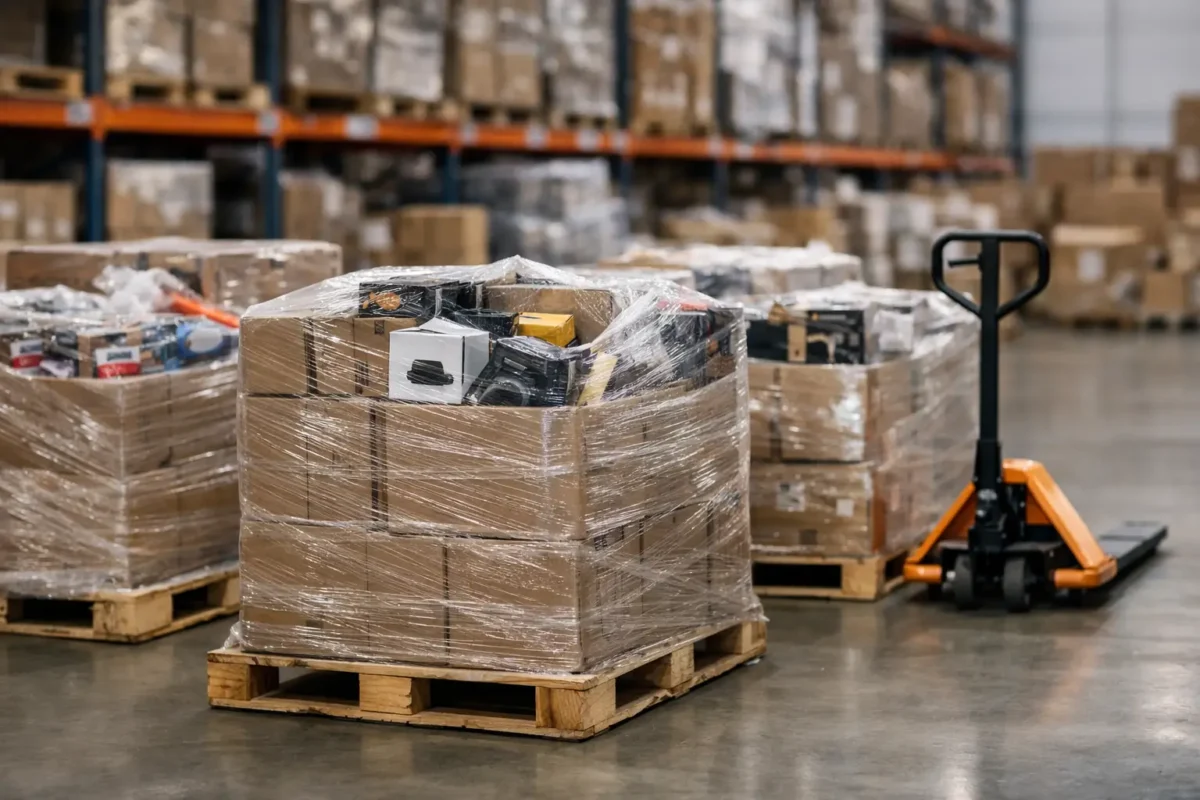
Amazon liquidation pallets are bulk lots of merchandise that have moved out of Amazon’s regular fulfillment channel. Inventory may include customer returns, overstock, shelf pulls, open-box items, discontinued products, packaging-damaged goods, or unsold seasonal merchandise. Pallets can be category-specific, such as tools, electronics, apparel, home goods, or cosmetics. They can also be mixed merchandise lots with a wider range of products.
That variety creates opportunity, but it also creates work. A customer return may be unused and complete, opened but functional, missing an accessory, cosmetically damaged, or nonworking. Overstock generally carries less uncertainty than returns, but every lot should be evaluated according to its stated condition, not the retailer name attached to it.
Serious buyers do not assume every item is ready to sell at full value. They build their offer around recovery rates. Some merchandise will be excellent for resale, some will need testing or repackaging, and some may be better suited for clearance bundles, parts, or local discount sales.
Why Resellers Buy Amazon Liquidation Pallets
The biggest advantage is purchasing power. Buying inventory in bulk can lower the per-unit cost compared with retail sourcing, thrift sourcing, or buying single wholesale cases. A mixed pallet can also help a new reseller test several categories without committing to a full truckload of one product type.
There is also demand behind many of the items. Household goods, small appliances, toys, clothing, shoes, tools, and consumer electronics often have established resale markets. Buyers may recognize brands, understand comparable retail prices, and respond to a value-driven offer.
Still, a recognizable source does not guarantee a profitable pallet. Electronics can carry stronger resale values but require more testing. Apparel can be easier to inspect but may move slowly if sizes, styles, or seasons do not fit your customer base. Mixed general merchandise gives you variety, while category-specific loads may be easier to price and sell consistently. The right choice depends on your labor capacity, sales channel, and available storage.
Start With the Numbers, Not the Retail Value
Many first-time buyers focus on the estimated retail value of a pallet. Retail value can be useful as a reference point, but it is not your profit. Your actual resale value is based on item condition, local demand, competition, selling fees, and the time required to process inventory.
Before buying, calculate your landed cost. This is the pallet price plus freight, unloading costs, taxes where applicable, marketplace fees, supplies, repair costs, and expected losses. If a pallet is inexpensive but shipping is high, it may no longer support the margin you need.
A practical way to evaluate a lot is to estimate a conservative recovery value. Look at the category, stated condition, number of pieces, known brands, and whether a manifest is available. Then ask what you can realistically sell the merchandise for in your market, not what it originally sold for at retail.
For example, a pallet with a $6,000 stated retail value may look attractive at a $1,200 purchase price. But if freight adds $350, 15 percent of the goods are unsellable, and your average selling price is closer to 25 percent of retail, the financial picture changes quickly. The goal is not to buy the highest retail number. The goal is to buy inventory you can process and turn into cash at a reliable margin.
Questions to Ask Before You Purchase
Ask whether the lot is manifested or unmanifested, what condition grade applies, and whether the photos represent the actual pallet. Confirm the pallet count, approximate dimensions, category mix, and pickup or shipping terms. These details help you compare one opportunity with another on a true landed-cost basis.
If you are purchasing customer returns, ask how the condition is described. Terms such as untested, salvage, as-is, and mixed condition should directly affect your pricing decision. An as-is return pallet may be a strong fit for an experienced discount retailer with testing staff, but it may not be the best first load for a seller working from a garage.
Match the Load to Your Sales Channel
Your best inventory source is the one that fits how you sell. Local storefronts, bin stores, flea market booths, and swap meets can move mixed goods quickly because buyers can inspect products in person. These channels are often well suited to housewares, seasonal products, toys, basic apparel, and open-box merchandise with minor packaging issues.
Online marketplaces can produce higher prices for specific brands and complete items, but they require more labor. You need time to inspect products, photograph them, write listings, package orders, and manage customer questions. Electronics, tools, collectibles, shoes, and branded goods can work well online when you can verify condition and model details.
Discount stores and bulk resellers need volume and repeatability. For these operations, full truckloads or larger wholesale lots may offer better per-unit economics than buying occasional single pallets. The trade-off is larger cash commitments, more storage, and a greater need for organized receiving and inventory flow.
Freight Is Part of the Buy
Freight is not an afterthought in liquidation. It is part of the inventory decision. A pallet that looks profitable near the warehouse can lose its edge when it must travel across several states. Quote-driven freight planning gives buyers a clearer picture before payment and helps prevent surprises after the order is placed.
Make sure your delivery location can accept the shipment. Commercial locations with a loading dock or forklift are usually the most efficient. If you are shipping to a residence or a location without equipment, liftgate service and appointment delivery may add cost. Confirm access, unloading capability, and receiving hours before freight is booked.
For buyers building a larger resale operation, combining purchases or moving into truckload quantities can improve transportation economics. That only makes sense when you have enough storage and a proven outlet for the merchandise. Lower freight per pallet is valuable only if the inventory does not sit too long.
Build a Process for Returns and Mixed Inventory
Profit leaks out when inventory arrives and sits unsorted. Plan your receiving process before delivery day. Separate merchandise into sellable, needs testing, needs cleaning or repackaging, bundle or clearance, and salvage categories. This creates a faster path from pallet to sales floor or online listing.
A simple operating routine can protect your margins:
- Photograph the pallet and any visible shipping damage before breaking it down.
- Count and sort inventory by category, condition, and likely selling channel.
- Test higher-value items first so you identify your best resale opportunities quickly.
- Price merchandise based on condition and local demand, not only original retail pricing.
- Move slow or lower-value goods through bundles, clearance tables, or bulk resale rather than letting them occupy space.
Track what sells. Over time, your own sales data is more valuable than a generic pallet description. You may find that kitchenware produces quick local turns, while apparel takes too much space. Or you may discover that tested tools consistently outperform broad mixed loads. Those insights should guide your next purchase.
Choose a Supplier That Gives You Straight Answers
A liquidation supplier should make it easier to understand what you are buying, how it will ship, and what happens next. Clear condition descriptions, available manifests, realistic photos, responsive communication, and freight support all reduce avoidable risk. No wholesale liquidation source can remove every variable from customer returns, but transparency lets you price those variables into the deal.
American Prime Pallet Liquidators LLC works with buyers who need bulk merchandise options, practical purchasing guidance, and freight coordination built around their resale goals. Whether you are starting with a mixed pallet or sourcing larger lots for an established operation, the stronger move is to buy with a plan rather than buy on excitement.
The pallet is only the starting point. Inspect it quickly, price it honestly, move it through the right channel, and let each load teach you what your customers will buy next.
