No products in the cart.
Blog
Best Pallets for Resellers With Real Margin
18
Jul
Jul
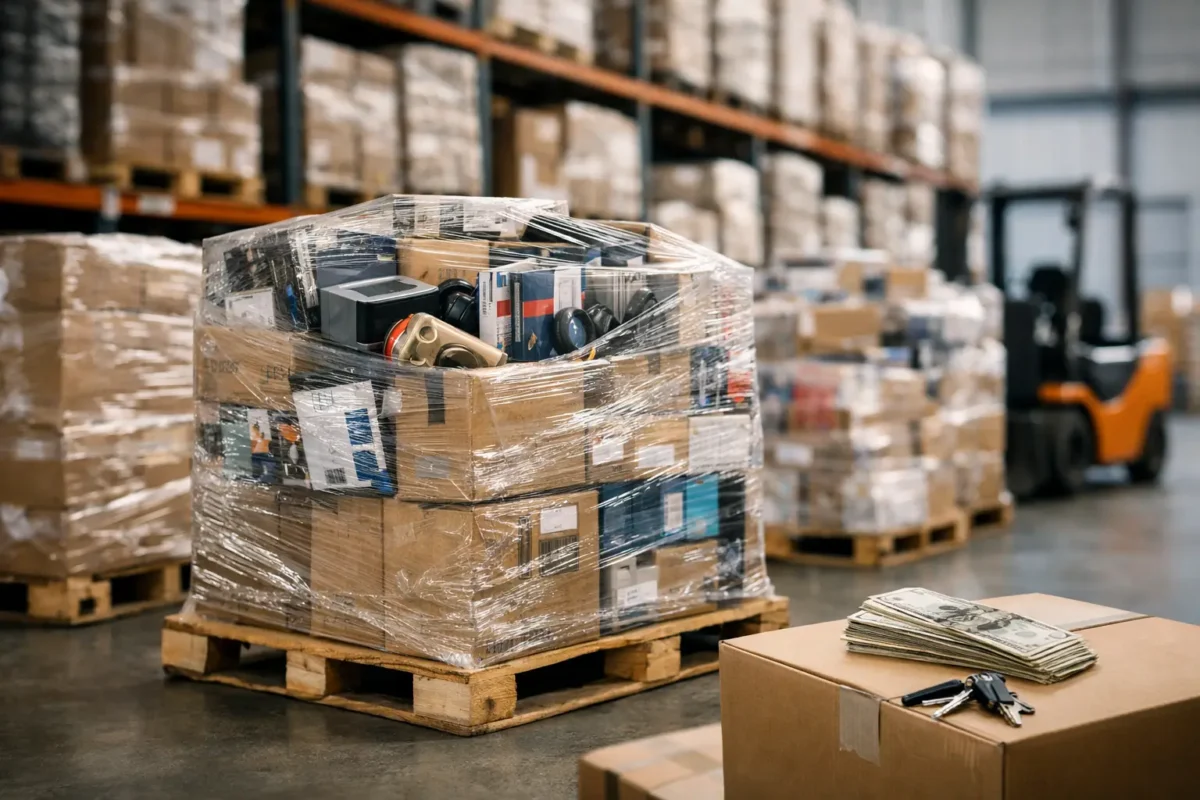
A pallet can look like a bargain at $400 and still become expensive inventory if it does not fit the way you sell. The best pallets for resellers are not simply the cheapest loads available. They are the loads with products you can move, condition you can manage, freight you can absorb, and enough margin left after labor and selling fees.
For a flea market vendor, that may mean mixed general merchandise with plenty of low-ticket items that sell fast. For an online seller, it may mean tested electronics, branded shoes, or new-in-box home goods with clear listings and higher average order values. The right pallet starts with your resale channel, not a supplier’s category label.
What Makes a Pallet Profitable?
Profit begins with the real landed cost, not the pallet price alone. Landed cost includes the merchandise, freight, unloading, storage, sorting labor, packaging, marketplace fees, returns, and the items that cannot be sold. A pallet with a low purchase price can lose its advantage when shipping is high or when half the load needs repair, testing, or disposal.
Before you buy, estimate how many units you expect to sell and what those units can realistically bring in. Use sold prices rather than active listings. Then leave room for markdowns. If your projected sales only slightly exceed your landed cost, the pallet is too risky even if the retail value looks impressive.
Condition matters just as much as category. Overstock and shelf pulls are usually the most predictable options because merchandise may be new, retail-ready, or close to it. Customer returns can produce strong value, especially in electronics, tools, and appliances, but they require more inspection and a higher allowance for missing parts, damaged packaging, and nonworking units.
Best Pallets for Resellers by Sales Channel
There is no single category that works for every business. The most profitable inventory is inventory that matches your customer base and your capacity to process it.
Mixed General Merchandise for Local Sellers
Mixed merchandise pallets are a practical entry point for discount stores, bin stores, flea market sellers, and local resellers. They can include kitchenware, toys, small home goods, seasonal products, basic electronics, apparel, and everyday retail items. Variety gives shoppers a reason to browse and gives you several price points to work with.
The trade-off is sorting time. A mixed pallet may contain fast-selling items alongside low-value filler, so buyers need an outlet for inexpensive goods. These pallets work best when you can sell volume quickly rather than depend on a few high-dollar pieces.
Tools and Home Improvement for Consistent Demand
Tools, hardware, and home improvement merchandise often perform well because buyers understand the value of recognizable brands and practical products. Hand tools, power-tool accessories, lighting, faucets, storage products, and home repair items can sell through local stores, online marketplaces, and contractor-focused channels.
Look closely at condition when buying returns in this category. A missing charger, battery, attachment, or instruction manual can change resale value significantly. If you have staff or experience to test and organize items, returns can create opportunity. If you need faster turn, new overstock or shelf-pull tool pallets are usually a safer fit.
Electronics for Higher Ticket Resale
Electronics pallets can offer higher average selling prices, particularly for gaming accessories, headphones, smart-home products, small appliances, monitors, and computer peripherals. They are a strong option for sellers who know how to test, reset, grade, and accurately describe merchandise.
They are not the best choice for every beginner. Electronics returns carry more functional risk, and online buyers often expect detailed condition notes and responsive customer service. Start with a manageable lot if you are new to the category. Build a testing process before taking on a large truckload.
Apparel, Shoes, and Accessories for Online Volume
Clothing, footwear, and accessories can be excellent inventory for sellers with active online storefronts, live-selling channels, or local boutiques. Branded shoes and new apparel with tags may bring attractive margins, while basics can move in bundles or discount formats.
The challenge is organization. Sizes, styles, seasons, and brands need to be sorted before listings go live. Apparel also has a more seasonal demand curve than household goods. Buy winter inventory early enough to sell it, and do not tie up too much capital in products your customers will not need for months.
Cosmetics and Personal Care for Fast Turnover
Cosmetics, beauty products, and personal care items can move quickly when they are unopened, current, and properly handled. They are compact, easy to ship, and frequently purchased by repeat customers. For online sellers, their small size can improve storage efficiency and reduce shipping expense.
This category requires tighter controls. Check seals, expiration dates where applicable, packaging condition, and product eligibility for your selling channel. Do not assume every item can be listed everywhere. Buyers who manage compliance and product quality carefully can find reliable turnover in beauty inventory.
How to Choose the Best Pallets for Your Business
Start with a category you already know how to sell. If your store has regular customers for home goods, do not switch to electronics just because a manifest shows a large retail value. Familiar categories help you price faster, spot desirable brands, and identify slow-moving products before they absorb your cash flow.
Next, choose the condition level that matches your operation. New overstock and shelf pulls usually require less processing and are better for retailers that need clean, ready-to-sell goods. Customer returns may cost less per unit, but they demand space, labor, testing, and a plan for damaged or incomplete merchandise. Neither option is automatically better. It depends on whether your operation is built for speed or recovery value.
Then consider lot size. A single pallet is useful for testing a supplier, a category, or a new sales channel. Multi-pallet orders can improve freight efficiency and provide enough depth to stock a small store. Full truckloads generally offer the strongest per-unit opportunity, but only when you have warehouse space, unloading equipment, working capital, and a proven way to sell the volume.
Do Not Let Freight Erase Your Margin
Freight is one of the biggest reasons a promising pallet turns into a weak buy. Ask for a quote based on your delivery address, pallet count, residential or commercial location, and whether you have a dock or forklift. A commercial delivery with proper receiving equipment is often simpler and less expensive than a residential delivery requiring liftgate service.
Factor unloading into the order before payment. A pallet may arrive shrink-wrapped and ready for a forklift, but that does not help if your location cannot receive it. Confirm pallet dimensions, weight, delivery access, and appointment requirements. Straight answers before shipment prevent expensive surprises after the truck arrives.
For buyers ordering multiple pallets, freight per pallet often improves as volume rises. That does not mean larger is always better. Only scale when the inventory category, sales pace, and storage capacity support the order. Buying more merchandise than you can process is not growth. It is tied-up capital.
Questions to Ask Before You Buy
A reliable liquidation purchase begins with clear information. Ask whether the lot is customer returns, overstock, shelf pulls, or mixed condition. Find out whether a manifest is available, whether the merchandise is tested or untested, and whether the photos represent the actual load or sample inventory.
Also ask how the supplier handles freight quotes, what payment process applies, and what you need to do at delivery. Legitimate wholesale buying is not about chasing a perfect mystery box. It is about understanding the risk level, pricing that risk correctly, and buying from a source that gives you practical information before you commit.
Build a Buying System Before You Scale
The strongest resellers do not buy every attractive load they see. They track each order by category, purchase price, freight, sell-through rate, average selling price, returns, and days to turn the inventory. After a few purchases, those numbers show which pallets are actually funding growth.
Use that information to buy deeper in your winners. If tools sell quickly in your store but apparel takes months to organize, allocate more capital to tools. If mixed merchandise creates daily traffic but online electronics produce better margin per unit, run both with separate budgets and expectations.
American Prime Pallet Liquidators LLC helps buyers source across categories while coordinating quote-based freight and bulk purchasing options. The best next order is the one you can receive, process, and sell with confidence – then repeat at a larger scale when the numbers prove it.
