No products in the cart.
Blog
Liquidation Pallets for Beginners Made Simple
20
Jul
Jul
A pallet marked at a fraction of retail can look like easy money. Sometimes it is. Other times, that low buy price disappears after freight, damaged units, marketplace fees, and slow-moving products take up space in your garage or store. Liquidation pallets for beginners are a real entry point into resale, but profit comes from buying with a clear plan, not from chasing the biggest apparent discount.
The goal is not to find a pallet that contains the most merchandise. The goal is to find inventory you can inspect, price, move, and replenish at a margin that works for your business.
What Are Liquidation Pallets?
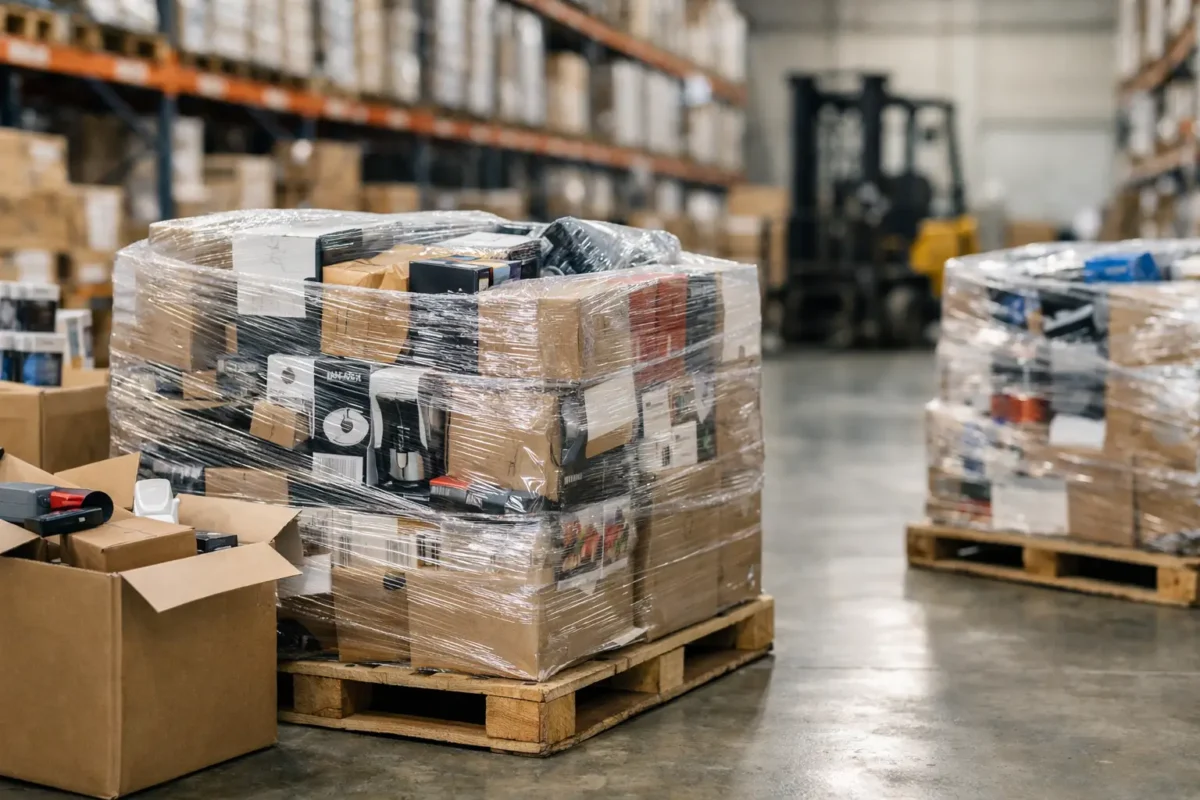
Liquidation pallets are bulk lots of merchandise sold by retailers, manufacturers, and supply-chain partners after the goods can no longer be sold through a standard retail channel. The inventory may include customer returns, overstock, shelf pulls, discontinued items, seasonal goods, or packaging-damaged products.
A single pallet can hold one product category, such as tools, shoes, kitchenware, or cosmetics. It can also be a mixed merchandise pallet with several categories in one load. Full truckloads are larger liquidation lots intended for established buyers, discount stores, exporters, and high-volume resale operations.
The merchandise condition is the key variable. Some products may be new and unopened. Others may have open boxes, minor cosmetic issues, missing accessories, signs of use, or functional defects. A pallet of customer returns is not the same as a pallet of shelf pulls, even if both are described as general merchandise.
That is why experienced buyers look past the retail value printed on a manifest. Retail value is a reference point, not a guarantee of what the inventory will sell for.
Liquidation Pallets for Beginners: Choose the Right Inventory
Your first purchase should match how and where you plan to sell. A beginner with a local flea market booth has different needs than an online seller or a discount-store operator. Start with a category you understand and can process efficiently.
For example, clothing can be easy to transport and sort, but it requires attention to sizes, brands, seasonality, and condition. Tools may have strong demand, yet missing batteries, chargers, or parts can reduce resale value quickly. Small home goods are often easier to test and bundle, while electronics can offer higher selling prices but carry more risk when sold as untested returns.
New buyers are usually better served by smaller, clearly described lots rather than jumping immediately into a truckload. A manageable pallet lets you learn how long receiving takes, what percentage of items are sellable, which products create customer questions, and which resale channel delivers the best return.
Ask yourself three practical questions before selecting inventory: Can I evaluate it? Can I sell it? Can I store it? If the answer to any of those is no, the pallet may be cheap for a reason that does not fit your operation.
Understand common inventory conditions
Inventory labels should guide your expectations, but they are not a substitute for due diligence. New or overstock merchandise generally presents less condition risk, although packaging may still show wear. Shelf pulls can be excellent for resale, especially when products were removed because of a reset, discontinued packaging, or seasonal change rather than a defect.
Customer returns require a different approach. Some returns are perfectly usable, while others are incomplete, damaged, or nonfunctional. These lots can work for resellers who know how to test, clean, repair, bundle, or sell products honestly as open-box or as-is inventory.
When reviewing a listing or speaking with a supplier, confirm whether the lot is manifested, unmanifested, tested, untested, or mixed condition. Also ask whether the stated quantity is an estimate or a verified count. Straight answers at the buying stage prevent expensive assumptions later.
Calculate Your Real Landed Cost Before You Buy
The pallet price is only one part of your investment. Your landed cost is what the inventory costs after every expense required to get it ready to sell. That includes the purchase price, freight, unloading costs, sales tax when applicable, supplies, labor, cleaning, testing, repairs, storage, and selling fees.
If you buy a pallet for $600 and freight costs $250, your starting cost is already $850 before you open a box. If 15 percent of the goods are unsellable and another portion needs new packaging or accessories, your actual cost per sellable item rises again.
A simple working formula is:
Expected sales revenue – inventory cost – freight – processing costs – selling fees = estimated profit
Use conservative selling prices. Do not assume every item will sell at full retail or even at the lowest price currently listed online. Check completed sales where possible, factor in local demand, and consider the condition you will be able to truthfully advertise.
A healthy margin leaves room for surprises. If a pallet is only profitable when every item works and sells immediately, it is not a strong first buy.
Freight Is Part of the Purchase Decision
Freight can change a good deal into a poor one, especially for buyers who are located far from the warehouse. Before committing, request a clear shipping quote based on your delivery address, pallet count, and whether you have a commercial location or residential delivery.
Commercial addresses with loading docks or forklifts typically make delivery simpler and may reduce accessorial charges. Residential delivery, liftgate service, limited-access locations, and missed appointments can add cost. Make sure you know whether the carrier will call ahead, where the pallet will be placed, and what equipment you need to unload it safely.
Do not order inventory before confirming you have enough space for it. A standard pallet can occupy more room than expected once you need walkways for sorting, shelving, photography, and outgoing orders. Wet, unsecured, or overcrowded storage can turn sellable inventory into a loss.
American Prime Pallet Liquidators LLC uses a quote-based freight process because delivery costs depend on the shipment and destination. That approach gives buyers a clearer picture of the complete purchase before they commit.
Build a Receiving and Sorting Process
The work begins when the shipment arrives. Take photos of the pallet and any visible freight damage before breaking it down. If there is damage caused during transport, document it immediately and follow the carrier and supplier procedures.
Then sort products into practical groups: ready to sell, needs testing, needs cleaning or repair, parts or bundle inventory, and unsellable goods. This prevents the common beginner mistake of listing products before confirming condition or completeness.
For each item, record a basic cost estimate, condition, expected selling price, and selling channel. You do not need complicated software on day one. A spreadsheet or organized inventory log can show you which categories are actually producing profit and which are consuming your time.
Test products safely and consistently. For electronics, verify power, primary functions, screens, ports, and included accessories. For household items, check for cracks, missing parts, stains, odors, and unsafe damage. Accurate descriptions protect your customer reputation and reduce avoidable returns.
Pick Resale Channels That Fit the Product
The best place to sell depends on the inventory. Fast-moving lower-priced goods may perform well at flea markets, bin stores, yard sales, and local discount outlets. Higher-value or brand-specific products may justify individual listings through online marketplaces. Bulky items can be more profitable locally because shipping them can erase margin.
You can also combine channels. Sell the best individual items one at a time, bundle complementary lower-value products, and move remaining inventory through clearance tables or wholesale lots. The objective is inventory velocity, not holding every item until it reaches an ideal price.
Be careful with restricted, recalled, expired, counterfeit, or regulated goods. Cosmetics, consumables, baby products, medical items, and branded merchandise may have additional resale rules or marketplace restrictions. When you are unsure, do not list the item until you have verified that it can be sold legally and accurately.
Avoid the Most Expensive Beginner Mistakes
New resellers often lose money because they buy based on retail value alone, ignore freight, or choose inventory they cannot test. Another costly mistake is treating all returns as damaged or all overstock as guaranteed new. Both assumptions can lead to bad pricing decisions.
Avoid buying mystery inventory simply because it is inexpensive. Unmanifested pallets can create opportunity, but they require a higher tolerance for uncertainty. A buyer with limited capital is usually better off paying a little more for a category and condition level they can evaluate.
Also avoid spending every dollar on the first pallet. Keep working capital for freight, supplies, replacement accessories, marketplace fees, and the time it takes for products to sell. Resale is a cash-flow business. A profitable pallet is still a problem if your money is tied up in slow inventory.
Your first pallet does not need to be perfect. It needs to teach you what sells in your market, how much processing your business can handle, and what buying terms protect your margin. Start with inventory you can control, track every cost, and let real sales results guide your next purchase.
