No products in the cart.
Blog
Return Pallets vs Overstock: Which Pays More?
28
Jul
Jul
A pallet that looks cheap on paper can become expensive once labor, testing, missing parts, and slow-moving items enter the picture. That is why the return pallets vs overstock decision matters before you place a wholesale order. Both inventory types can create strong resale opportunities, but they serve different business models, risk tolerances, and selling channels.
For a reseller, the better buy is not always the pallet with the lowest price. It is the inventory that fits your ability to inspect, process, price, and sell merchandise quickly.
Return Pallets vs Overstock: The Core Difference
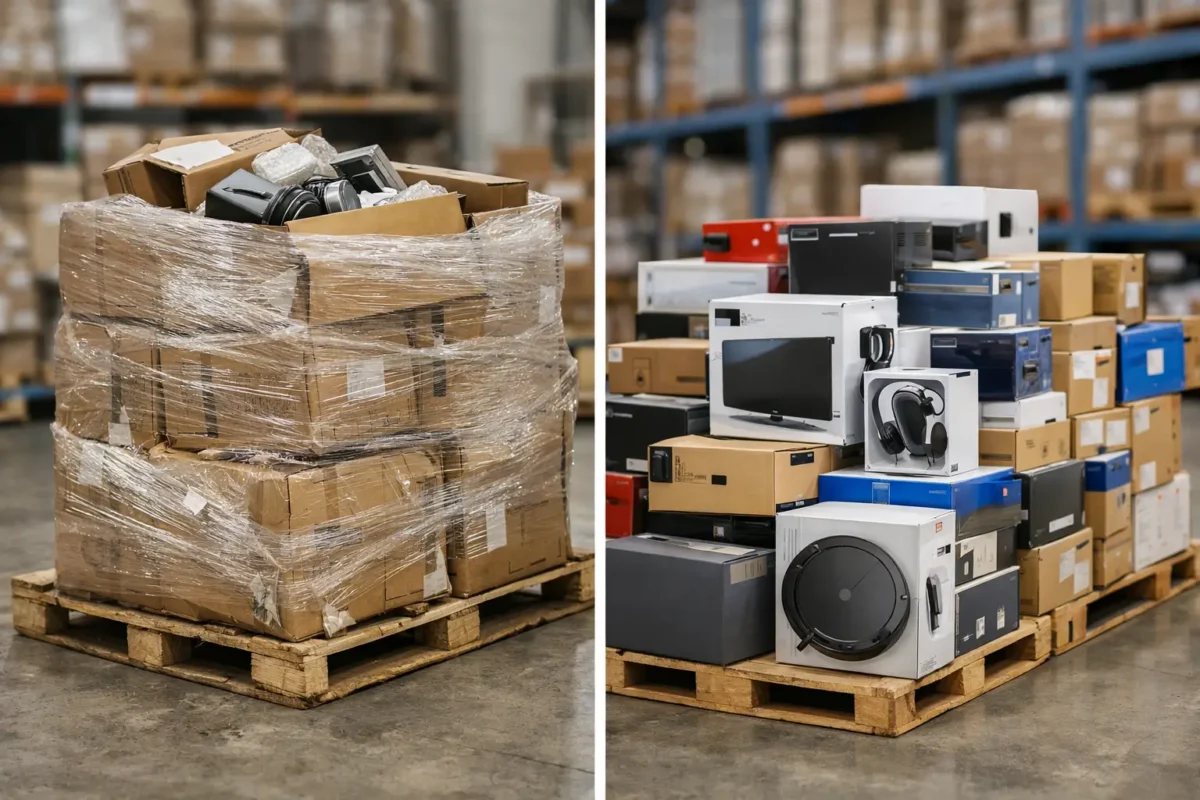
Return pallets contain merchandise that has been sold to a customer and sent back to the retailer or manufacturer. The reason for the return may be minor, such as an unwanted gift, damaged packaging, a wrong size, or buyer remorse. It can also be more serious, including a defective item, missing accessories, visible wear, or a product that no longer works.
That range of condition is what makes return pallets attractive and challenging. A pallet may include sealed items, open-box products, lightly used merchandise, and goods that need repair or are best sold for parts. The product mix can be broad, especially in general merchandise, electronics, tools, home goods, apparel, and seasonal categories.
Overstock inventory is different. These are typically new, unused products that were never sold to an end customer. Retailers and manufacturers may liquidate overstock after a seasonal reset, packaging change, canceled order, discontinued line, warehouse consolidation, or forecast that resulted in too much inventory.
In most cases, overstock offers more consistent condition and faster listing potential. Products may still have original packaging and tags, although packaging can show warehouse handling or shelf wear. Overstock does not automatically mean premium, high-demand inventory. It simply means the items were excess stock rather than customer returns.
Condition, Labor, and Selling Speed
Condition is usually the first practical difference buyers notice. With returns, you should expect more hands-on work. Each item may need to be inspected, cleaned, tested, matched with accessories, and graded before it reaches your sales floor or online listing.
That work can be profitable if your operation is built for it. A reseller with a repair bench, product knowledge, warehouse staff, or a strong outlet channel may turn open-box and lightly used goods into high-margin inventory. An electronics seller who can test devices and identify simple fixes, for example, may find more opportunity in returns than a buyer who needs ready-to-sell merchandise.
Overstock is generally easier to process. If the items are new and packaged, your team can often count the units, verify SKU information, create listings, and move the goods into inventory with less handling. That makes overstock a practical option for online sellers, boutique owners, discount stores, and newer buyers who want more predictable condition.
The trade-off is purchase cost. Because overstock often has a higher percentage of retail-ready units, it may cost more per pallet or per unit than returns. The higher entry price can still make sense when it reduces labor, customer complaints, returns from your own buyers, and the time inventory sits unsold.
How Profit Margins Really Compare
Return pallets can offer a lower cost basis and bigger upside per successful item. A single tested, working power tool, small appliance, gaming accessory, or branded pair of shoes may recover a meaningful portion of your pallet cost. The challenge is that not every item will be sellable at full value.
Your real margin on returns depends on recovery rate. Recovery rate is the percentage of inventory you can sell after accounting for defects, missing components, damaged goods, and items with limited local demand. If you buy a pallet at a deep discount but only recover value from half the merchandise, the low purchase price may not be enough.
Overstock usually supports a more predictable margin model. You can estimate resale prices from product condition, quantities, seasonality, and comparable new merchandise. There may be less dramatic upside than with a bargain return load, but there is often less uncertainty in the calculation.
Freight belongs in both calculations. A pallet that is profitable at pickup can lose its advantage once shipping is added, particularly when the merchandise has low unit value or is bulky. Always evaluate the landed cost: pallet price, freight, unloading, processing labor, selling fees, storage, and expected markdowns.
| Buying Factor | Return Pallets | Overstock | | — | — | — | | Typical condition | Mixed, from sealed to salvage | Usually new and unused | | Processing time | Higher | Lower | | Purchase price | Often lower | Often higher | | Margin predictability | Lower | Higher | | Best for | Experienced, hands-on resellers | Buyers seeking consistency |
Which Inventory Fits Your Resale Operation?
Choose return pallets when you have a clear process for handling mixed conditions. This can include testing electronics, sorting apparel by size and condition, bundling incomplete items, selling repairable goods, or moving lower-grade merchandise through flea markets, auctions, outlet bins, or local bargain channels.
Returns can also make sense when your business needs variety. Mixed general merchandise pallets may help a discount store keep shelves changing, attract repeat customers, and create multiple price points. The key is knowing where every grade of item will go before it arrives.
Choose overstock when speed and consistency matter more than chasing the lowest cost per pallet. A retailer stocking a clean store, an e-commerce seller protecting account metrics, or a business buying for a specific category may benefit from inventory that requires less condition grading.
Overstock is especially useful when product presentation drives the sale. Cosmetics, apparel, shoes, kitchenware, toys, and giftable seasonal products tend to perform better when packaging, labels, and original components are intact. Buyers in those categories may accept fewer bargains in exchange for a smoother customer experience.
Many established resellers buy both. They use overstock to maintain reliable, retail-ready inventory and use return pallets for higher-margin opportunities, outlet stock, or secondary sales channels. This approach spreads risk, provided you have enough space and staff to keep the inventory streams organized.
Buy With Better Information, Not Assumptions
The most common buying mistake is treating every liquidation pallet as though it has the same condition and resale potential. Ask how the merchandise is categorized. Terms such as new, shelf pull, overstock, untested return, customer return, open box, and salvage are not interchangeable.
When a manifest is available, review it as a planning tool rather than a guarantee. Check quantities, brands, retail values, item categories, and whether the listed products fit your customer base. Retail value is not the same as resale value, and resale value is not the same as cash you will collect after fees and discounts.
For unmanifested or mixed return pallets, plan for variability. Price the load based on a conservative recovery estimate, not on the best items you can spot in a photo. Consider whether you can safely sell the merchandise as tested, open box, used, as-is, or for parts. Accurate condition descriptions protect your reputation and reduce avoidable returns.
Before ordering, confirm pallet dimensions, weight, freight cost, delivery requirements, and whether your location can receive a commercial shipment. A liftgate, appointment delivery, residential service, or limited access location can change the final freight quote. If you are buying truckloads, confirm how much warehouse space and unloading capacity you actually have.
American Prime Pallet Liquidators LLC helps business buyers compare available liquidation options, coordinate quote-based freight, and source inventory suited to their resale goals. The best purchase starts with clear expectations about condition, category, volume, and the channel where you will sell the goods.
A smart first order is not necessarily the largest order. Start with inventory you can inspect and move within your current operation, track the results by condition grade, and let your actual recovery rate guide the next purchase. That discipline turns liquidation buying from a gamble into a repeatable sourcing strategy.
