
No products in the cart.
Blog
Electronics Liquidation Pallets Review for Resellers
26
Jul
Jul
A pallet that looks cheap on paper can become expensive fast when half the units need chargers, screens, batteries, or labor before they can be sold. The real value of electronics liquidation is not the retail price printed on a manifest. It is the recoverable resale value after freight, testing, cleaning, repairs, marketplace fees, and unsellable inventory. This electronics liquidation pallets review gives resellers a practical way to evaluate a load before committing capital.
For the right buyer, electronics pallets can create steady inventory for online stores, flea markets, repair shops, discount outlets, and local resale. They can also tie up cash if the condition grade is misunderstood or freight is treated as an afterthought. The difference comes down to buying the right load for your sales channel and operating capacity.
What Electronics Liquidation Pallets Usually Contain
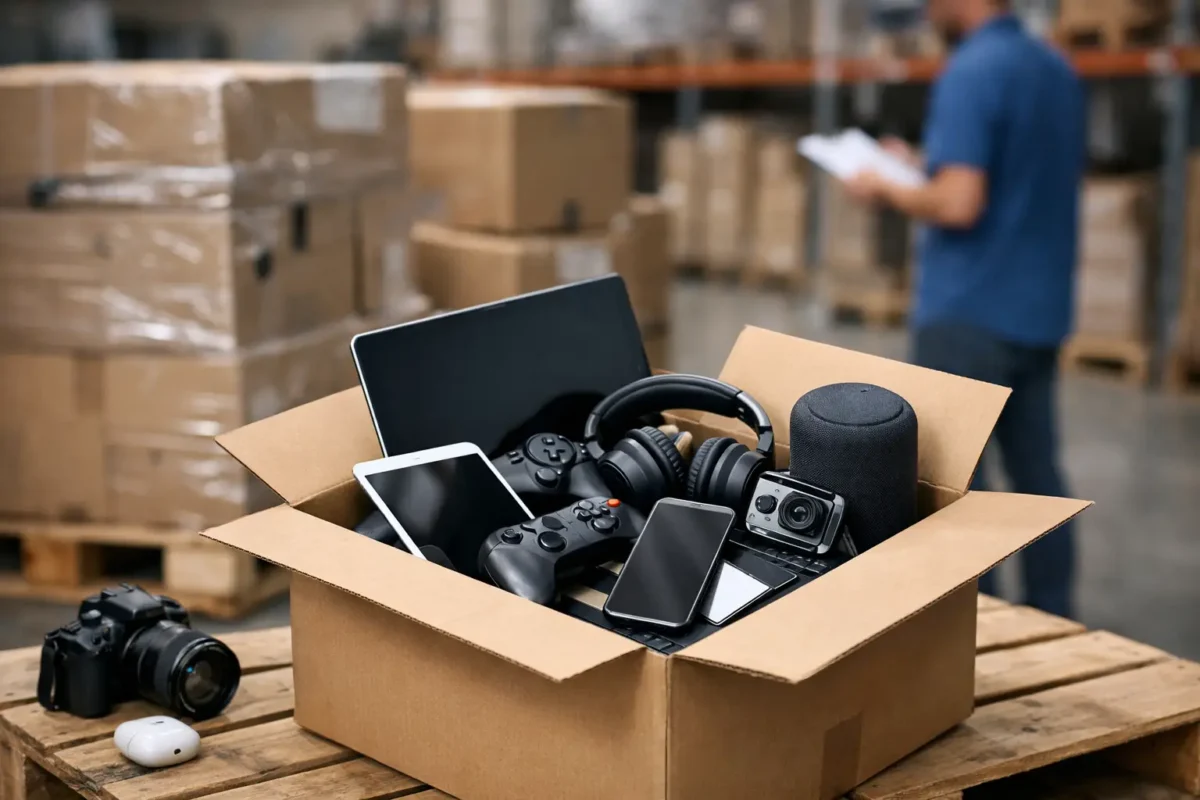
Electronics liquidation pallets are bulk lots of customer returns, overstock, shelf pulls, open-box goods, and discontinued inventory. Depending on the source, a pallet may include small appliances, headphones, speakers, gaming accessories, computer peripherals, smart-home devices, tablets, televisions, phones, cameras, cables, and assorted electronics accessories.
A mixed pallet can offer broad selling opportunities, but it requires sorting. One buyer may see a pallet of Bluetooth speakers, routers, keyboards, and smartwatches as easy online inventory. Another may prefer a focused lot of tested small appliances because it is easier to price, photograph, and sell in a physical discount store. Neither approach is automatically better. The right choice depends on how you sell and how quickly you can process merchandise.
The source and condition description matter as much as the product category. Overstock and shelf-pull loads generally have a higher likelihood of retail-ready merchandise. Customer-return loads may have strong upside, especially when purchased at the right cost, but they also carry more uncertainty. A return may be unused, missing packaging, incomplete, damaged in transit, defective, or simply unwanted by the original buyer.
Electronics Liquidation Pallets Review: What Buyers Should Evaluate
A useful review is not based on whether a pallet contains recognizable brands or high MSRP items. It is based on whether the lot can produce enough recoverable revenue to cover every cost and leave a workable profit margin.
Condition Grades Are Not a Guarantee
Condition labels help establish expectations, but they should never be treated as a promise that every item works. Terms such as new, overstock, shelf pulls, open box, returns, untested, salvage, and mixed condition describe the overall type of inventory. They do not replace inspection.
Untested electronics can be profitable for buyers with technical knowledge, repair capability, or a parts resale channel. They are riskier for a beginner who plans to list every item as working. If you cannot test a product quickly and accurately, price that uncertainty into your bid or purchase decision.
Ask what the condition designation applies to. Is it assigned by unit, by case, or across the entire pallet? Are accessories likely to be included? Is original packaging expected? Straight answers on these points help you buy based on realistic recovery, not best-case assumptions.
Manifests Help, but They Have Limits
A manifest is one of the most useful buying tools available. It may show product descriptions, quantities, model numbers, retail values, and sometimes condition notes. Use it to identify products with active demand, compare likely resale prices, and spot items that require specialized testing or have weak resale velocity.
Still, a manifest is not a guaranteed profit statement. MSRP is especially easy to overvalue. A $200 retail item may sell for far less when it is open box, missing accessories, an older model, or competing against heavily discounted new inventory. Use completed-sale research from the marketplaces and local channels where you actually sell, then estimate conservatively.
If a pallet is unmanifested, your purchase price should reflect the added risk. Unmanifested mixed electronics may suit experienced buyers who are comfortable sorting, testing, bundling, and liquidating lower-value items. It is usually not the best first purchase for a reseller with limited working capital.
Freight Changes the Deal
Freight is part of the inventory cost, not a separate inconvenience to address after purchase. A pallet with an attractive price can lose its margin if delivery costs are high, accessorial charges apply, or the shipment is headed to a residential location without appropriate unloading equipment.
Before ordering, confirm the pallet count, approximate dimensions, total weight, shipping origin, delivery address, and whether the location has a loading dock or forklift. Ask for a quote that clearly identifies what is included. A quote-driven freight process gives buyers a clearer landed cost and reduces surprises at delivery.
For larger orders, truckload or multi-pallet purchasing can improve the freight cost per pallet. That does not mean every buyer should immediately purchase more. Buying volume only makes sense when you have enough cash, storage, labor, and sales capacity to turn the inventory efficiently.
Build Your Numbers Before You Buy
The most dependable way to review an electronics pallet is to calculate a conservative recovery estimate. Start with the likely selling price of the goods in their actual expected condition, not their original retail value. Then subtract all costs connected to getting the products ready and sold.
Your working calculation should include the purchase price, freight, taxes where applicable, unloading, testing supplies, replacement accessories, cleaning, repair labor, packaging, selling fees, shipping to customers, refunds, and disposal of unsellable items. A pallet that appears to have $8,000 in retail merchandise may only have a fraction of that amount available as realistic resale revenue.
A simple rule helps protect cash flow: assume some portion of returned electronics will not be sellable as complete, working retail units. The exact percentage depends on the grade, source, product type, and your ability to repair or part out items. Build a downside case before you buy. If the deal only works when nearly every item is perfect, it is not a strong liquidation purchase.
Match the Pallet to Your Resale Channel
Your selling channel should guide your inventory selection. E-commerce sellers often benefit from smaller, shippable electronics such as headphones, accessories, keyboards, routers, and smart-home products. These items are easier to store and can be listed individually, though they require accurate descriptions, testing, photos, and customer service.
Local retailers and flea market sellers may move value-priced speakers, small appliances, gaming accessories, cables, and open-box goods more quickly. Customers in these channels often want a deal they can see and take home the same day. Bundling compatible accessories can also turn low-dollar items into a more sellable package.
Large televisions, monitors, and similar fragile items can offer opportunities, but they require more space, careful handling, and a clear plan for damage claims or local delivery. Do not buy bulky electronics simply because the stated retail value looks impressive. Velocity, storage cost, and breakage risk matter.
Questions That Separate Better Suppliers From Risky Deals
Before placing an order, get direct answers on the inventory and logistics. A professional supplier should be able to explain the available lot type, condition category, whether a manifest is available, the approximate pallet size, pickup or delivery options, payment expectations, and the process for requesting freight.
The most useful questions are straightforward:
- What is the stated condition and source of the inventory?
- Is a manifest, packing list, or sample inventory detail available?
- Are products sold as-is, and are returns or claims accepted?
- What are the estimated pallet dimensions, weight, and freight costs?
- Can the supplier help match a lot to your resale channel and budget?
Be cautious of sellers who promise guaranteed profits, claim every return works, or refuse to provide basic shipment details. Liquidation is a wholesale business built around variable inventory. Transparency about that variability is a stronger sign than exaggerated claims.
A Smarter First Purchase
New buyers should avoid treating their first electronics pallet as a lottery ticket. Start with a load size you can inspect, test, and list within a reasonable time. Select categories you understand, keep freight proportional to the purchase, and reserve cash for the work that happens after delivery.
Create a receiving process before the truck arrives. Photograph the pallet, count visible cases, document damage, sort by category, and test items in batches. Separate working units, incomplete units, repair candidates, parts inventory, and recycling immediately. Fast organization prevents good merchandise from disappearing under low-value clutter.
For resellers looking to build a repeatable sourcing operation, American Prime Pallet Liquidators LLC can provide bulk inventory options and freight guidance based on the size of the order and destination. The best supplier relationship is not just about finding a low opening price. It is about gaining a clearer view of inventory, logistics, and the next purchase that fits your business.
The best electronics pallet is rarely the one with the biggest claimed retail value. It is the one you can receive, process, price, and sell with enough discipline to turn inventory back into cash and buy again.
