
No products in the cart.
Blog
Electronics Pallets Versus Tool Pallets for Resale
21
Oct
Oct
A pallet can look profitable on paper and still tie up your cash if the merchandise does not match how you sell. That is the real decision behind electronics pallets versus tool pallets. Both categories can produce strong resale margins, but they create very different workloads, customer expectations, return risks, and selling speeds.
For a discount retailer, flea market vendor, online seller, or growing liquidation business, the best category is rarely the one with the highest stated retail value. It is the one you can inspect, price, merchandise, and move through your sales channels with the least avoidable friction.
Electronics Pallets Versus Tool Pallets: The Core Difference
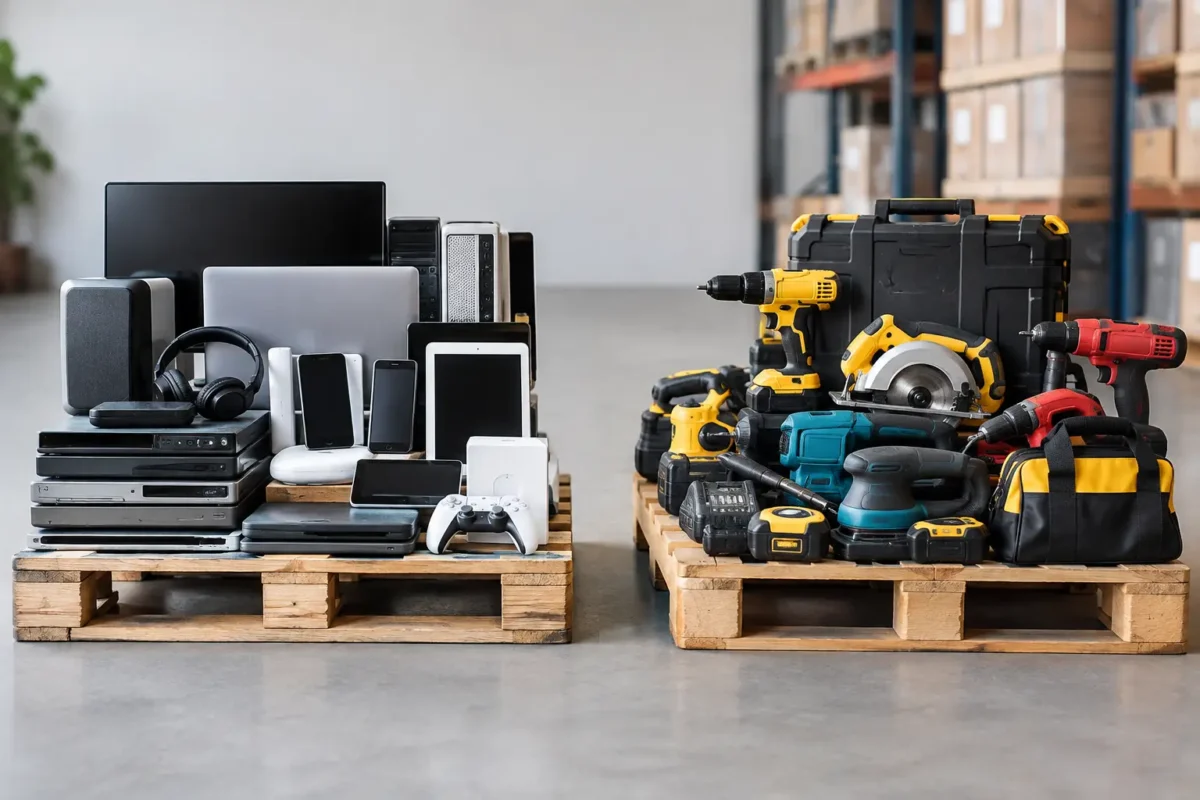
Electronics pallets typically contain items such as headphones, speakers, smart home devices, tablets, monitors, gaming accessories, small appliances, cables, chargers, and assorted consumer tech. Depending on the lot, the inventory may include customer returns, overstock, shelf pulls, open-box items, or untested merchandise. The appeal is obvious: recognizable brands and higher individual retail prices can create attractive resale opportunities.
Tool pallets may include hand tools, power tools, cordless tool kits, bits, blades, measuring equipment, tool storage, shop accessories, hardware, outdoor equipment, and workwear-related items. Buyers tend to see tools as practical inventory. A contractor, homeowner, mechanic, or weekend DIY customer usually knows what problem the product solves before they pick it up.
That distinction affects the entire resale process. Electronics often require more testing, cleaning, charging, accessory matching, and model-specific research. Tools can also arrive with missing batteries, damaged packaging, or signs of use, but many products are easier to inspect visually and explain to an in-store customer.
Neither category wins in every situation. Electronics may bring more upside per unit when you have the labor and sales channels to handle them properly. Tools may offer steadier turnover when your buyers want useful merchandise at a clear discount.
Resale Value Is Not the Same as Retail Value
Liquidation buyers should treat MSRP as a reference point, not a profit guarantee. A $200 retail wireless speaker with no charger, uncertain battery life, or a locked account has a very different resale value from a sealed overstock unit. The same principle applies to a cordless drill missing its battery and charger.
With electronics, condition grading matters heavily. New, sealed, shelf-pull, open-box, tested-working, untested, salvage, and incomplete items should not be priced the same way. A mixed electronics pallet can contain excellent resale inventory, but it can also contain products that need parts, troubleshooting, or bundling before they are sellable.
Tool pallets are often more forgiving, particularly when the merchandise is from established brands and has broad local demand. A scratched tool case may not matter much to a buyer who wants a functional saw or impact driver at a discount. Still, battery-powered tools deserve closer attention. Battery age, charger compatibility, tool-only configurations, and missing components can change your expected margin fast.
A practical approach is to estimate revenue from the condition you expect to receive, not the condition you hope to receive. If a lot is mixed returns or untested, build your purchase decision around a realistic recovery rate. Your sellable units must cover the cost of the pallet, freight, labor, selling fees, storage, discounts, and the products that will not move.
Testing Time Can Decide the Better Buy
Testing is where many new resellers underestimate their operating cost. Electronics often need a process: charge the item, power it on, inspect the screen or ports, test key functions, verify included accessories, factory reset when appropriate, photograph the unit, and assign a condition grade. Certain devices may require account checks, software updates, or more specialized knowledge.
If you sell online, proper testing protects your seller reputation. A buyer who receives a defective device is likely to request a return, leave negative feedback, or dispute the transaction. That risk does not mean electronics are a bad buy. It means you need a repeatable inspection system before buying deep into the category.
Tools usually allow for faster first-pass inspection. You can check packaging, visible wear, model numbers, moving parts, cords, switches, and included components. Powered tools should still be tested when possible, but many hand tools, accessories, and storage items can be sorted and priced quickly.
For a one-person operation, the difference is substantial. A mixed electronics pallet may create days of work before you list the first quality item. A tool pallet with broad retail-ready merchandise may be easier to put on shelves, take to a flea market, or sell from a warehouse. If fast inventory turns are a priority, labor should be part of your buying math.
Build Labor Into Your Pallet Cost
A pallet that costs less but consumes 25 hours of sorting and testing is not automatically the better deal. Give your time a real dollar value. Track how long it takes to process each pallet, how many units become sellable, and how many require markdowns or disposal.
After several purchases, you will know whether your operation earns more from testing high-value electronics or from moving practical tools with less handling. That is the kind of data that helps a reseller scale without guessing.
Demand Depends on Where You Sell
Electronics can perform well through online marketplaces because customers frequently search by brand, model, storage size, color, and compatibility. A tested item with clean photos and accurate details can reach buyers beyond your local area. Smaller consumer electronics also ship more easily than many large tools or shop items.
The trade-off is competition. Online customers can compare prices quickly, and they expect clear condition descriptions. Commodity items such as common cables, basic phone cases, or low-end accessories may have limited individual value unless you bundle them. Larger televisions, monitors, and appliances can bring shipping challenges and higher damage risk.
Tool pallets often fit local retail, bin stores, discount stores, flea markets, contractor sales, and pickup-based marketplace listings. Customers can handle the merchandise, see the brand, and make a quick purchase without waiting for shipping. Seasonal demand can help as well. Yard tools, shop equipment, generators, and outdoor accessories may move faster at certain times of year.
Consider your existing customer base. If your buyers are bargain hunters looking for useful household and work items, tools may produce dependable traffic. If you already have a strong online listing operation and staff who can test products, electronics can give you more opportunities to sell higher-ticket individual units.
Freight, Storage, and Damage Risk Matter
Freight is part of the landed cost, especially for bulky or fragile categories. Electronics pallets can contain fragile screens, glass surfaces, and sensitive components. Poor handling after delivery can turn a good lot into a loss, so inspect your shipment promptly and document visible freight damage according to the carrier process.
Tool pallets can be dense and heavy. Power tools, hardware, metal storage products, and outdoor equipment may raise weight and require more floor space. Heavier lots may cost more to move, but they can also be well suited to local sales where customers haul purchases themselves.
Before requesting a quote, think beyond the pallet price. Confirm whether you have a commercial delivery location, loading equipment, help available for unloading, and enough secure space to sort inventory. A quote-driven freight process gives you a clearer view of your total investment before you commit.
When Electronics Pallets Make Sense
Electronics pallets are a strong fit when you have the ability to test items, photograph products well, write accurate listings, and manage online customer service. They can also work well for buyers who understand specific categories, such as gaming, audio, computers, or small appliances. Category knowledge helps you identify high-demand models and avoid pricing mistakes.
They are less suitable when you need inventory that can be placed directly on the sales floor with minimal processing. If your cash flow depends on fast turnover and you do not have testing capacity, untested electronics can become a backlog rather than an asset.
When Tool Pallets Make Sense
Tool pallets are often a practical starting point for resellers who serve local customers and want merchandise with clear everyday demand. Hand tools, tool sets, storage, hardware, and recognizable power tool brands can be easy for customers to understand. They also give discount retailers a category that encourages repeat visits from homeowners and tradespeople.
However, do not assume every tool item will sell quickly. Specialized equipment may sit longer, and incomplete cordless systems can require deeper discounts. Check whether the lot contains retail-ready merchandise, returned goods, mixed conditions, or a meaningful amount of parts-only inventory.
Buy for Your Process, Not the Hype
The right pallet category is the one that fits your selling process from delivery through final sale. Ask about the merchandise source, condition type, manifest availability when applicable, pallet count, estimated weight, and freight options. Then decide how you will process the inventory before placing the order.
American Prime Pallet Liquidators LLC works with business buyers who need straightforward bulk inventory options and freight coordination, not vague promises about easy profit. A good sourcing conversation starts with your sales channel, budget, storage capacity, and tolerance for returns or repairs.
Start with a purchase size you can process completely. Learn what sells, record your actual recovery rate, and reorder the categories that keep cash moving. The best pallet is not the one that looks most exciting when it arrives – it is the one your business can turn into reliable sales.
